Beam, channel, angle, plate and HSS all move through the same floor, and most of the schedule is lost before anything gets welded. Here is where a laser changes a structural workflow, what it does not touch, and which Vantix platform fits which bottleneck.
Book a structural demo at the Lumby, BC showroom

Structural steel fabrication equipment in Canada usually means a saw, a drill line, a plasma or oxy-fuel table, and an outsourced profile vendor. A profile laser collapses cutting, coping, hole-making, marking and bevel weld prep into a single setup.
Every outsourced profile invoice carries a vendor's markup, and your last twelve months of those invoices is the clearest single number in the case for bringing profile processing in-house.
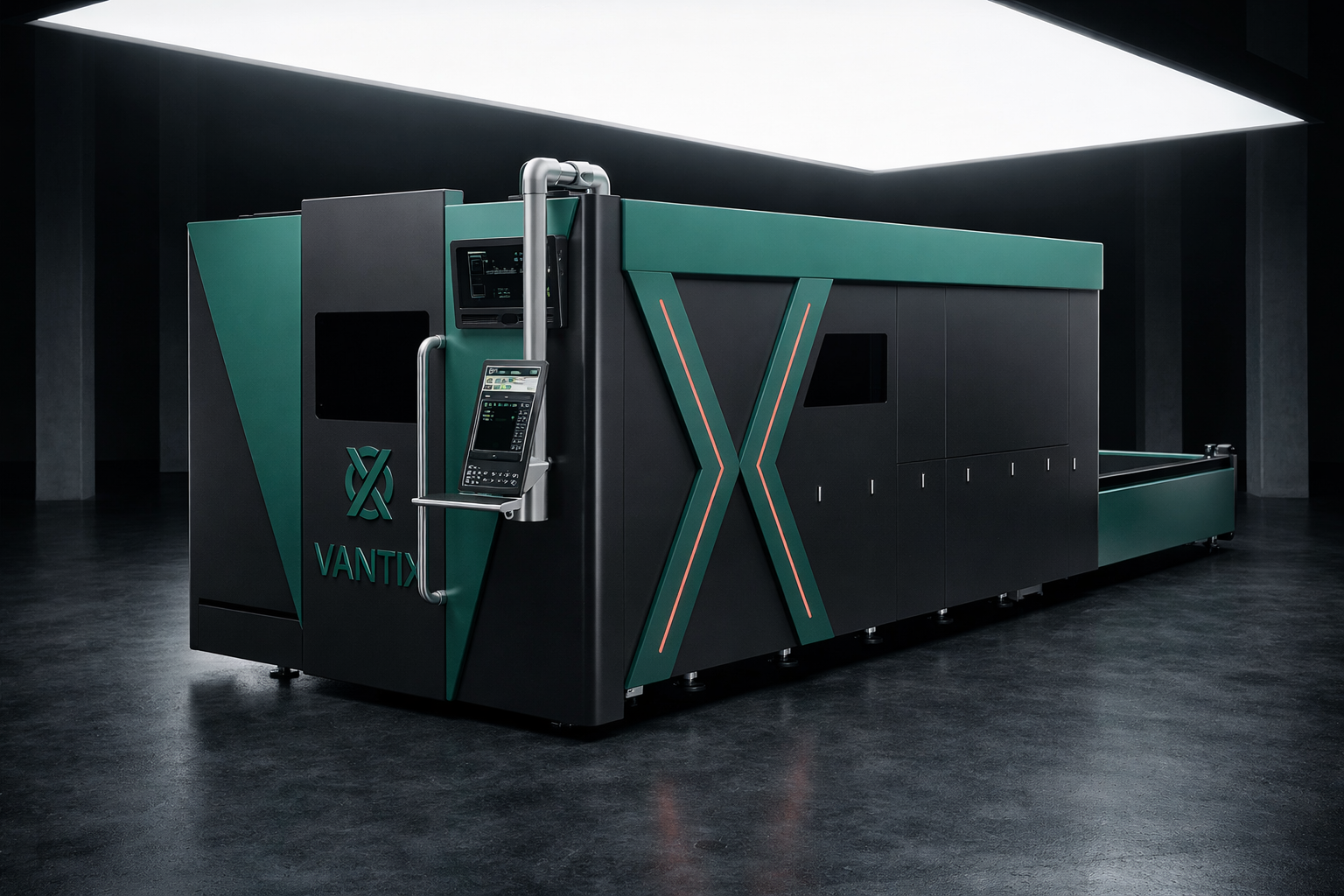
The Vantix HPM structural profile platform is dual-station. The front station runs H-beam, I-beam, channel and angle; the rear station runs flat sheet and plate, so connection material is cut in the same cell as the sections it bolts to.
A continuous bevel head to plus or minus 45 degrees produces straight, V and Y cuts and weld-joint prep directly off the machine, which removes the secondary grinding step that normally backs up a weld crew.
A laser does not replace everything in a structural shop. Plate above the machine's rated thickness, high-volume large-diameter hole work, plain square cut-to-length, and fit-up and welding labour all stay where they are.
A structural fabricator does not run one material. In any given week the floor sees wide-flange beam and column, channel, angle, HSS and round tube, plus the plate that connects them: gussets, base plates, stiffeners, clips and shear tabs. Each stream has its own route through the shop, and each route has a step where the work stops moving.
Most equipment conversations start with cutting speed. In a structural shop, cutting is rarely the constraint. The constraint is everything either side of the cut: transferring the detail to the steel, coping the ends, putting holes in, dressing the edges, and waiting on a vendor to return the sections you could not process yourself.
Running mixed job-shop work as well as structural? See laser solutions for metal fabrication shops
Automatic layout is one of the three reasons Vantix gives for the HPM platform existing at all. The specification sheet states that it eliminates manual marking and reduces errors when processing H-beams. Every hole centre, every cope and every connection reference is currently transferred to the steel by hand, and every one of them is a chance to put a mark in the wrong place.
Coping is the step most often sent out, because doing it well by hand is slow and doing it badly shows up at fit-up. Vantix's tube and profile sheet describes parts coming off the machine with miter cuts, copes, hole patterns and notches already in place, with no secondary operations.
Holes on a laser are cut, not drilled or punched, so the hole pattern comes from the same program as the profile and lands in the same setup. Nothing is re-fixtured between the cut and the holes.
Vantix is blunt about this one. The HPM sheet's closing line reads: integrated bevel means no secondary grinding station, no hand-prep on joints, no backed-up weld team waiting on edge prep. The bevel head runs continuously through plus or minus 45 degrees and produces straight cuts, V-cuts, Y-cuts and weld-joint preparation.
Beams do not go up on their own. Because the HPM platform carries a rear flat sheet and plate station alongside the profile station, gussets and base plates are cut in the same cell rather than queued behind another machine.
Put your last twelve months of outsourced profile invoices next to the cost of doing that work in-house before you look at any machine. That ledger is the business case, and it is yours rather than a vendor's.
Three things, in order of how easily you can measure them.
Margin first. Every outsourced profile invoice carries the vendor's markup, and that money stays in the shop when the work does.
Schedule control second. Work you cut yourself runs in your sequence, not in someone else's queue. For a fabricator holding an erection date, control over sequence is often worth more than unit cost.
Downstream welding time third. Vantix lists structural fabrication as a tube and profile application specifically because accurate fit-up reduces welding time and rework. That is the honest version of the claim: it reduces welding hours, it does not remove them.
These are Vantix's published figures across the cutting, tube and structural profile platforms. Which configuration suits a shop depends on the sections and thicknesses it actually runs.
Electrical service is confirmed in writing for the exact configuration quoted. Full machine-level detail for the structural platform, including the dual-station layout, the bevel head and the protected motion architecture, is on the fiber laser profile cutting page.
Read the full fiber laser profile cutting specifications
Structural work is drawn before it is cut, and the detailing model drives everything downstream. Any equipment conversation that skips the software handoff is incomplete.
What Vantix publishes is this. The fiber cutting platform accepts DWG, DXF and industry-standard CAD/CAM. The tube and profile platform supports direct CAD import with auto-nesting. The HPM structural platform provides automatic layout.
What Vantix does not publish is a named integration with any particular detailing package. If your shop runs a specific detailing environment and expects to drive the machine directly from it, treat that as a question for Vantix rather than an assumption, and get the answer in writing. Vantix's standing offer is the right way to test it: bring your drawings and your material to the Lumby showroom and have them run before you sign anything. Take a real job, not a sample part.
A shop that buys on an overstated claim finds out on the first heavy job. Here is the honest boundary.
The 5 in steel figure is at 60 kW. At the power levels most Canadian shops actually configure, the ceiling is lower, and shops cutting genuinely heavy plate keep a burning table for whatever sits above the machine's rating.
A laser makes a hole by cutting it. Shops running very heavy flanges, or large volumes of big-diameter holes, generally keep the drill line rather than retire it.
For a square cut-off with no cope, no holes and no bevel, a band saw is still cheaper per cut. A profile laser earns its place on parts that need more than a cut.
The machine gets sections to fit-up ready. It does not fit them up and it does not weld the assembly. Better edge geometry reduces welding hours; it does not remove the weld crew.
Detailing, blasting, painting, galvanizing, shipping and erection are unchanged. The laser affects the middle of the process, not its ends.
Structural work in Canada is certified at the shop, not at the machine. The CWB Group puts it plainly: buildings and structures under the National Building Code of Canada, and its provincial versions, must be welded by CWB-certified companies, and CSA W47.1 certifies the company itself: its welding supervisors, welding engineers, welding procedures and welder qualifications (Source: CWB Group, CSA W47.1 company certification (cwbgroup.org), retrieved 2026-09-16). No machine purchase moves that certification in either direction, and a machine's CSA status never stands in for it.
Laser safety is a workplace duty on top of that. In BC, WorkSafeBC's OHS Regulation §7.19(4) governs Class 3B and Class 4 lasers through ANSI Z136.1; in Alberta, OHS Code Part 20 designates the same classes as radiation equipment (Sources: WorkSafeBC OHS Regulation Part 7; Alberta OHS Code Part 20; retrieved 2026-09-16). Plan the enclosure, training and signage with your safety lead before the machine arrives.
See the fiber laser profile cutting platform, including bevel head and dual-station specifications
See tube and profile laser cutting for coped, mitered and notched long sections
See fiber laser cutting machines for gussets, base plates and heavier plate
Most structural shops weigh two of these at once. The order you buy them in depends on which stream currently carries the most outsourced work.
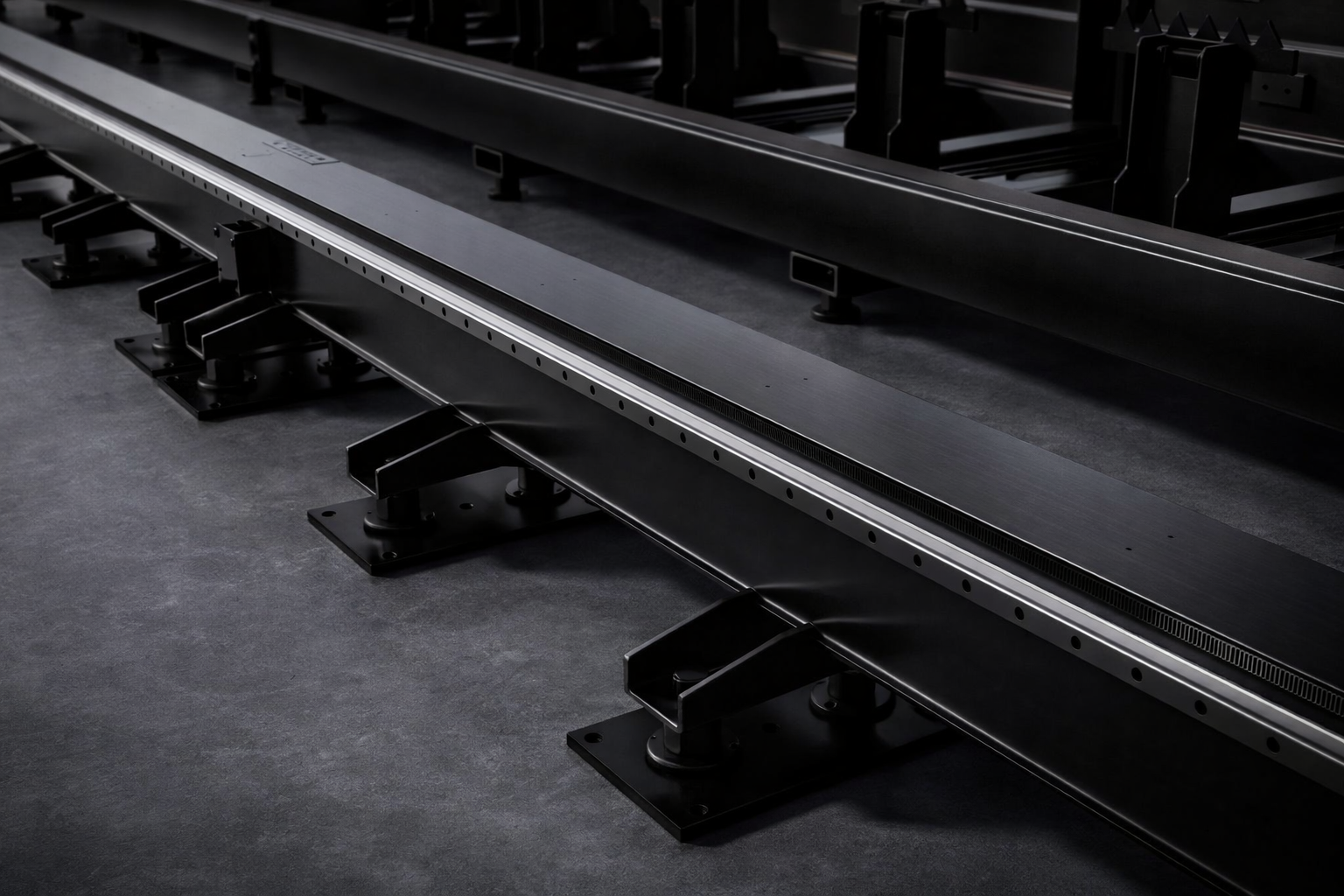
For a structural fabricator, downtime is not an inconvenience, it is an erection date. Vantix's commitments are the same across every platform: parts stocked in Lumby, British Columbia rather than overseas, a 24/7 Canadian support hotline, on-site response within 48 hours across Western Canada, and a two-year warranty. Five days of on-site training are published for the fiber cutting, tube and profile, and structural profile lines, which includes this platform. Named components appear on the specification sheet rather than being left vague. Certification scoping and the documentation package for procurement review are set out on the certifications and compliance page.
Vantix's offer is the one a structural fabricator should insist on from any vendor: run the actual work before anyone signs. The Lumby, British Columbia showroom has equipment running. Bring a representative section and the detail that goes with it, and review cycle time, edge quality and workflow fit against what your shop does today.