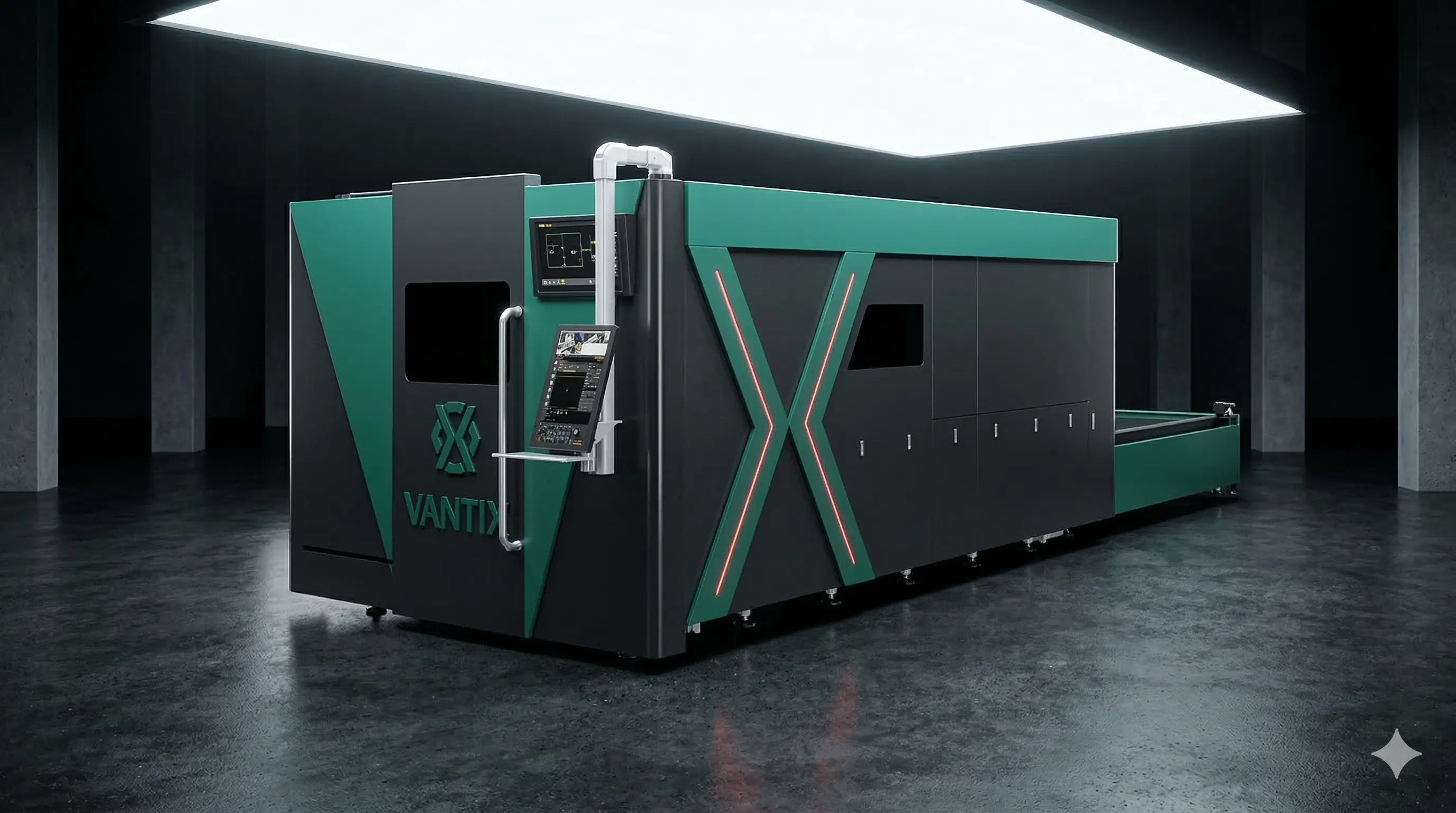
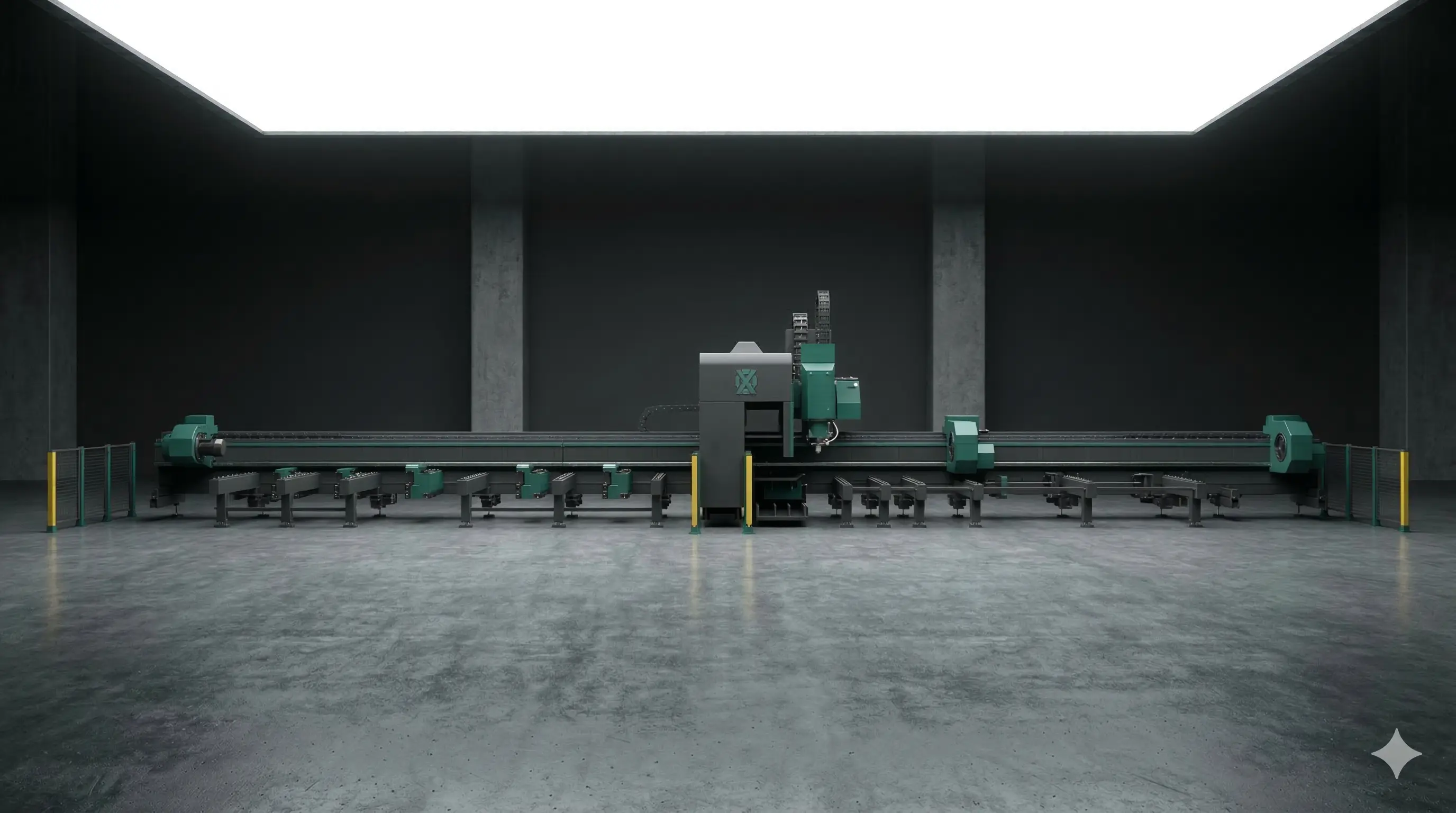
Every named part below comes from mill-supply and mill-maintenance literature, not from a laser brochure. This is the recurring steel a mill buys, repairs or fabricates, and each row is work a fabrication shop can quote.
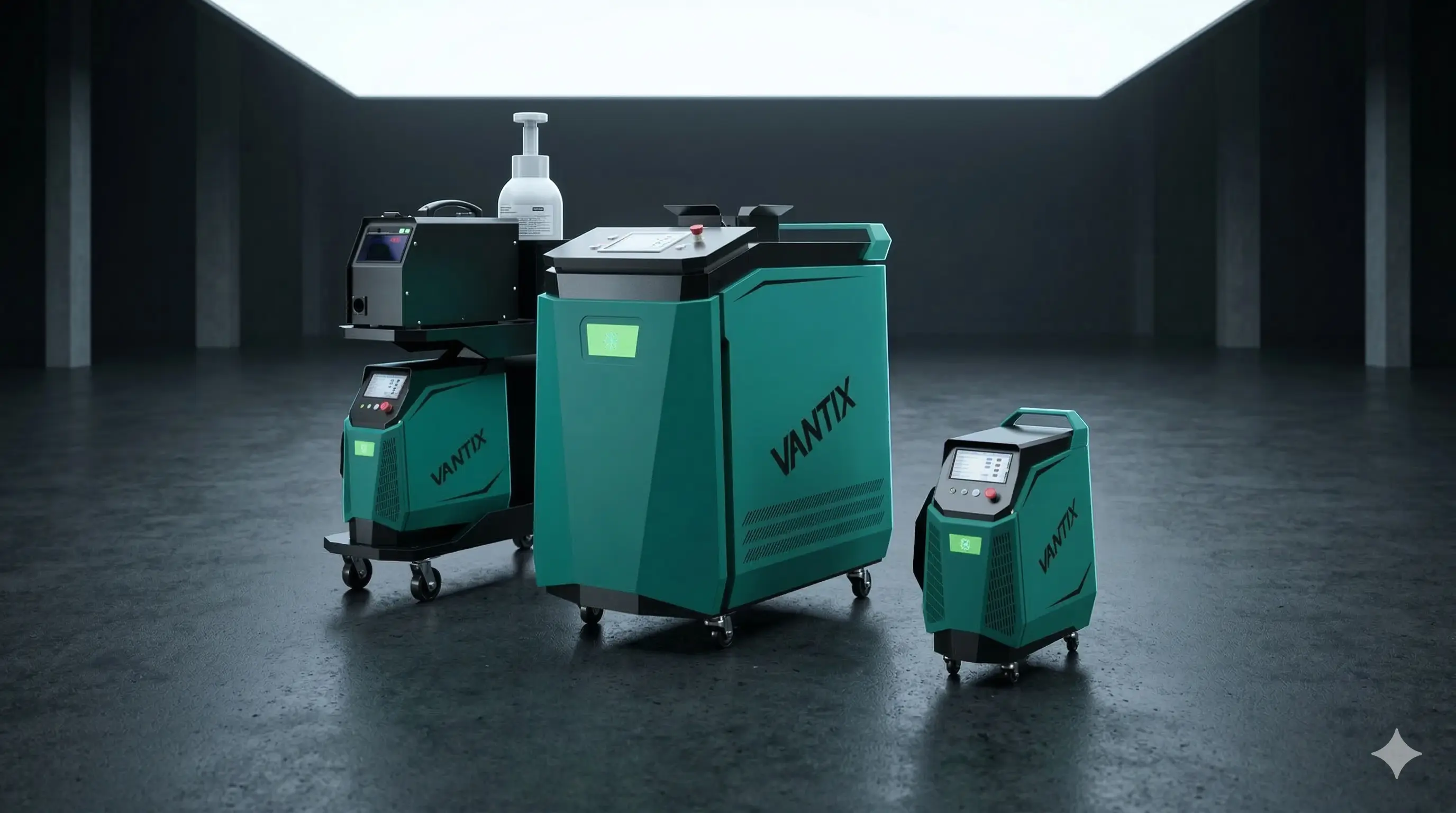
Fouled surfaces are their own category: saw guides, conveyor chains and rollers carry pitch, rust and old coatings. What Vantix publishes for its cleaning line, and what it does not, is covered below.

The only peer-adjacent published study of sawmill downtime cost puts hardwood mill operating costs at $4 to $25 per operating minute, and shows that at a 20,000 board-feet-per-day mill, five minutes of downtime costs roughly $92 once lost profit and still-accruing operating cost are added together. Five unnecessary minutes a day, across 250 operating days, is about $23,000 a year. Across the 22 mills observed, average downtime was 16.7% of scheduled time; well-run mills benchmark near 6.25%. Those are US hardwood figures in 1999-2000 dollars; treat them as the published floor, not a current BC number. A modern interior softwood supermill's throughput, and therefore its downtime cost, is far higher. (Wiedenbeck and Blackwell, Hardwood Sawmill Downtime Costs, USDA Forest Service Treesearch #14619, retrieved 2026-08-14.)
Chip quality is the quiet revenue line behind screen-plate accuracy. Sawmill residual chips run only 65 to 75% accepts versus over 90% from whole-log chippers, and chip thickness screening improves kraft pulp yield by roughly 2% on an absolute basis (for example, 46% to 48%). Screen-plate hole size and wear are the mechanism. A shop that can cut replacement screen plates to pattern, in-house, on the day they are needed, is defending the mill's chip contract. (Acrowood case study, retrieved 2026-08-14.)
The incumbent thermal process for wear plate is plasma. High-definition plasma systems run $50,000 to $65,000 US before the table, mechanized plasma holds about ±0.015 to 0.020 in, and one fabrication-equipment vendor's own breakeven math prices conventional-plasma edge cleanup at 15 extra minutes of grinding per part, about $1,500 a month of labour at 200 parts a week and $30 an hour. Budget air-plasma consumables last as few as 120 to 250 starts. Even the wear-plate suppliers assume thermal cutting: CCO overlay plate, which its manufacturer rates at 5 to 6 times the wear life of AR400/500 in ASTM G65 testing, ships with install guidance that says plasma-cut and plug-weld. Dross, heat-affected cracking of the overlay and bolt-hole quality on liner patterns are the practical pain points. (Piranha Fabrication vendor content and Wearcon manufacturer claims, both labelled as such, retrieved 2026-08-14.)
The margin backdrop makes the maintenance budget the fight it is: as of the 2025 administrative review, combined US duties on Canadian softwood stand at 35.19% for most producers, 47.59% for Canfor and 26.47% for West Fraser, with a further 10% Section 232 tariff on timber and softwood lumber effective October 2025. Mills surviving that arithmetic sweat their assets and scrutinize every outsourced invoice, which is exactly the audit this page invites. (Global Affairs Canada, softwood lumber recent developments, retrieved 2026-08-14.)
Every wage row below is Government of Canada Job Bank data (reference period 2023-2024, updated 2025-11-19, retrieved 2026-08-14). They are the rates a mill or contractor pays before burden, and the rates every outsourced fabrication invoice already has baked in.
Certification is a recurring line, not a one-time one: at one BC test centre, a CWB welder test runs $299 for one position to $499 for all positions, the SkilledTradesBC challenge test is $999, and CWB qualifications last two years and only while employed by a CWB-certified or applicant company (Okanagan College weld-testing fee card, retrieved 2026-08-14, fees subject to change; CWB Group welder qualification page, retrieved 2026-08-14). Against that: Vantix publishes that its handheld laser welder is trained in days and runs on operator-level wages; the machine itself is quoted per configuration in Canadian dollars. The laser does not replace your millwright. It changes which repairs wait for one.
Almost nobody selling laser equipment writes down which certifications belong to whom. Four scopes, four holders; mixing them up is the fastest way to sound like an outsider, so here is the map. None of these is something a machine vendor can hold for you.
The practical split: W47.1, W59 and S16 vocabulary belongs to welded structural repair conversations. WorkSafeBC Part 7 and ANSI Z136.1 laser-class vocabulary belongs to machine installation conversations. If your shop is CWB certified, adding a laser process to your procedures is a conversation to open with the Bureau before the equipment arrives. And any vendor, including Vantix, should hand you a model-specific compliance package in writing rather than a brochure adjective.
BC's forest sector supports about 95,000 jobs and $12.8 billion in GDP, on Statistics Canada data to December 2024. The interior regions (Cariboo, Thompson-Okanagan, Nechako, Kootenays and the Northeast) together account for roughly $6.9 billion of that GDP and about 53,000 jobs: the belt running through Prince George, Quesnel, Williams Lake, 100 Mile House, Kamloops, Vanderhoof and Houston is where sawmilling density is highest. (BC Council of Forest Industries, Rooted in BC 2026 Economic Impact Study technical report, retrieved 2026-08-14.)
Counted as mills rather than as forest-sector jobs, the customer base is overwhelmingly British Columbian: ISED counts 181 employer establishments in British Columbia under NAICS 3211, sawmills and wood preservation, against 41 in Alberta in 2025 (310 and 76 including non-employers). That is more than four in five of the two provinces' mills, and all of them sit inside the published 48-hour on-site service area.
Vantix's facility in Lumby is inside that geography, not two time zones from it. Parts are stocked in Lumby, scheduled on-site service is published at 48 hours for Western Canada, and the phone line is a 24/7 Canadian support hotline. Vernon, Kamloops and Kelowna are the named interior service areas; the mills of the Cariboo and Nechako should confirm response timing against their postal code in writing, which is the honest version of a coverage claim.