Laser Systems for Oil and Gas Fabrication Shops

Pipeline supports and modular skids are named applications on our structural profile spec sheet. Alberta sits inside our published 48-hour on-site area, which is the difference between a service promise and a service plan.
Laser cutting structural steel for oil and gas module fabrication
Who This Page Is For
Fabrication shops serving upstream, midstream and plant work: pipe supports, structural steel, modular skids and shop-built assemblies, on turnaround schedules that do not move.
Alberta Is Not an Afterthought
Global brands put an engineer on a plane. Offshore importers bury your ticket in a queue. Alberta is inside the published 48-hour on-site area, and spares ship from Lumby, BC in 1 to 3 days.
Where the Honest Line Sits
Western Canada is the committed on-site region. Phone and remote support carry no geographic limit. East of Alberta there is no published on-site commitment, and we would rather you read that here than discover it during a shutdown.
See our Canadian service coverage
Summary

Key Takeaways

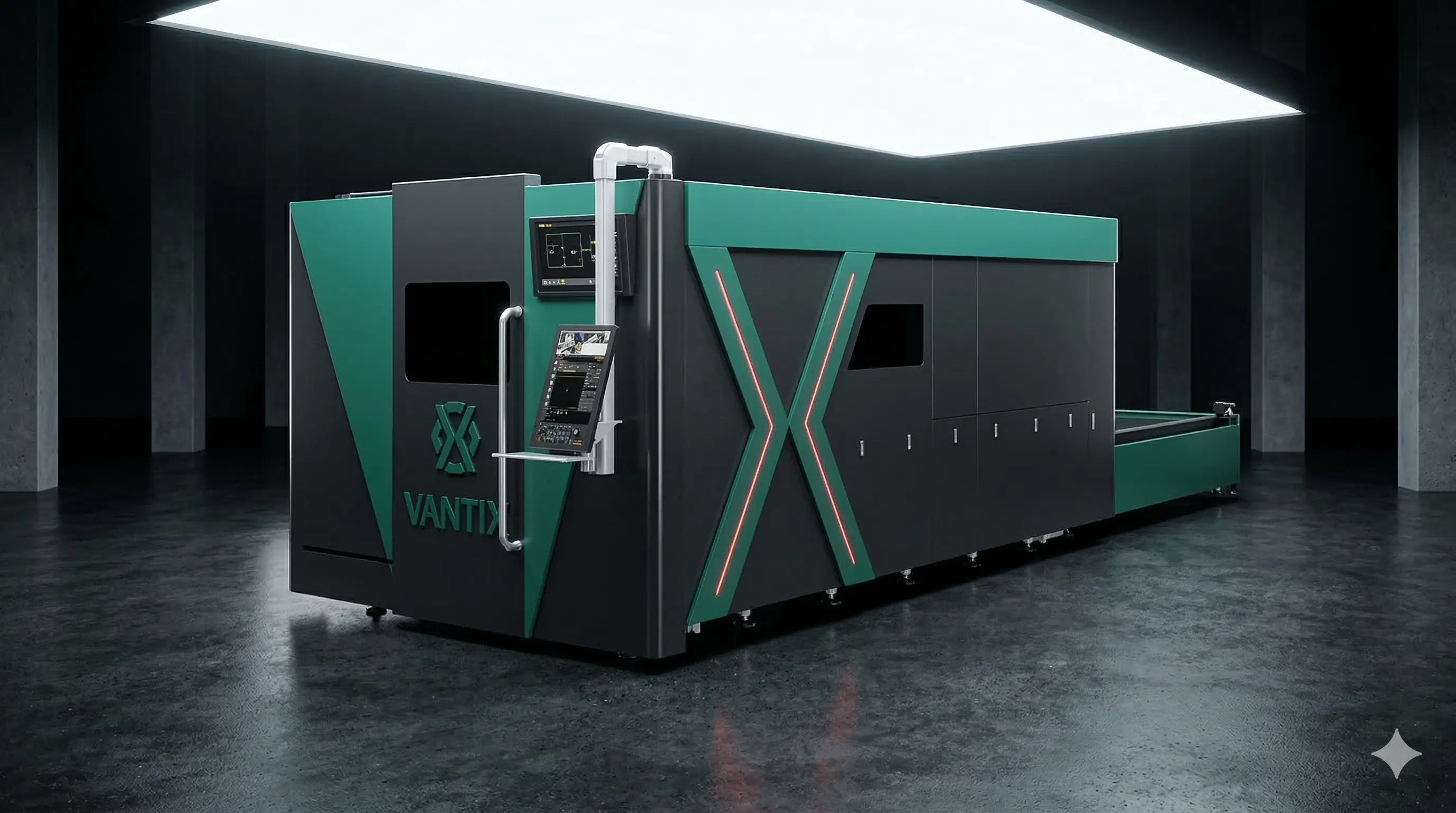
Vantix's structural profile sheet names this industry's parts: pipeline supports and modular skids. The tube sheet cuts pipe and profile to 48 ft lengths, 40 in diameters and 1 in wall, material-dependent; the cutting sheet runs 3 to 60 kW with steel to 5 in at 60 kW.
The energy-fabrication thickness sweet spot is roughly 3 to 25 mm: schedule pipe walls, skid steel and gussets. Verified anchors: NPS 2 Sch 40 wall is 3.91 mm; NPS 6 Sch 80 is 10.97 mm; NPS 6 Sch 160 is 18.24 mm.
A pipe spool package in Alberta gets a PP number, not a CRN: ABSA issues CRNs for boiler, pressure vessel and fitting designs, and separate provincial PP numbers for pressure piping design registrations. No cutting or welding machine ever carries either.
Alberta welders run a $38.00/hr provincial median, $45.00 in Wood Buffalo–Cold Lake; 76% of employers recruited platework fabricators over a recent two-year window and 56% reported hiring difficulty. Vantix publishes handheld laser welding at 4× MIG/TIG, trained in days, from $32,000 CAD, for non-code shop welds.
Alberta, including Calgary and Edmonton, sits inside the committed 48-hour on-site area, with parts shipped 1 to 3 days from stock in Lumby, BC. East of Alberta there is no published on-site commitment.
What Energy Fabrication Demands
Watch the Vantix process
Plate, Structure and Skid Work
Skid frames, pipe supports and equipment structures are heavy plate and beam, and they are always on a turnaround clock.

What the specs say: fiber laser cutting from 3 kW to 60 kW cuts steel to 5 in (127 mm), stainless to 3.5 in (89 mm) and aluminum to 2.5 in (64 mm), all at 60 kW, with ±0.03 mm repeatability.
See our structural steel fabrication equipment
Bevel Prep Without the Grinder Queue
Hand-prepping weld joints is the bottleneck nobody budgets for, and it backs up the weld crew standing behind it.

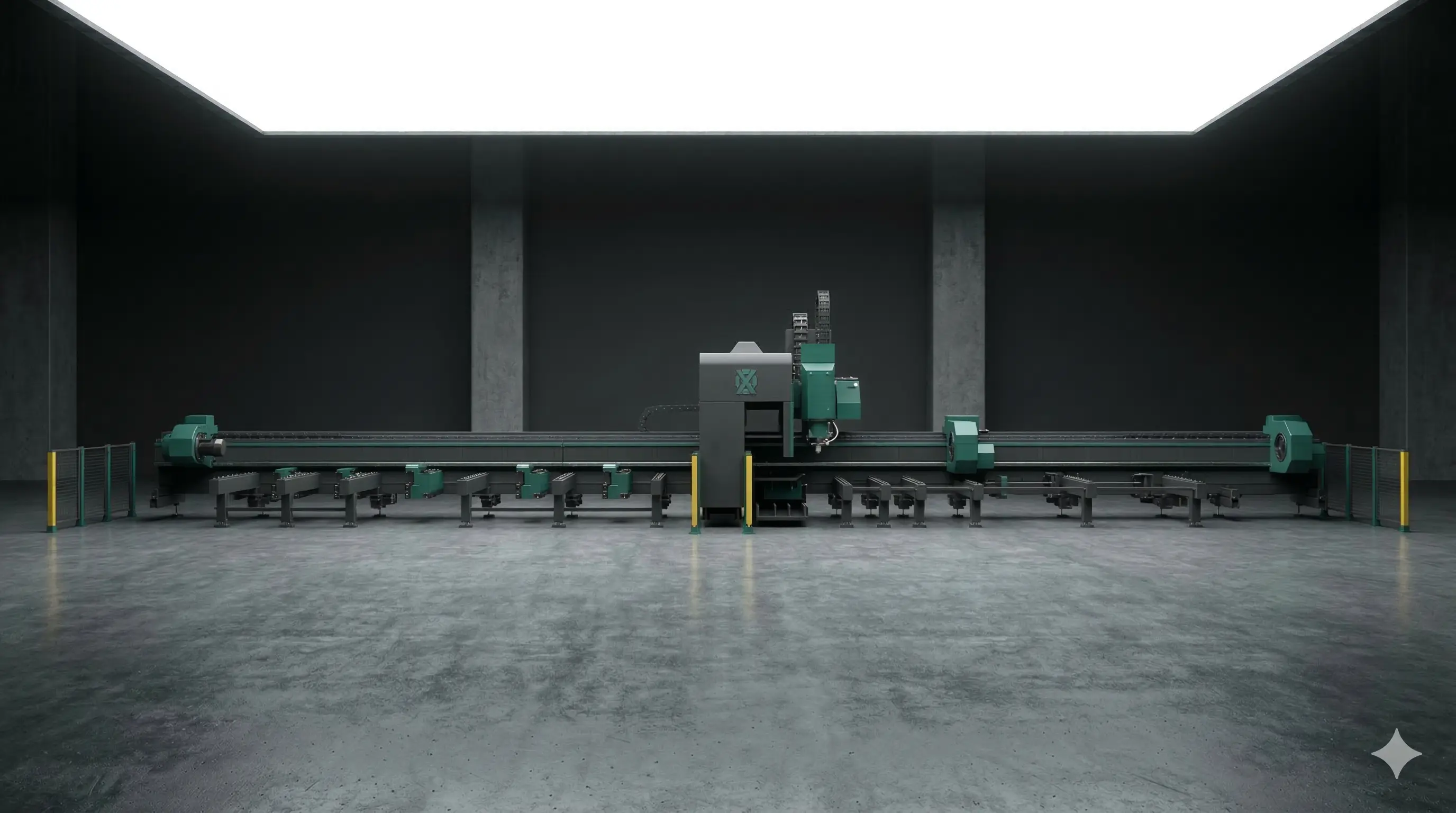
What the specs say: the HPM structural profile system carries a ±45° continuous bevel head producing straight, V and Y cuts and weld-joint prep off the machine, on a modular 20 ft bed extendable to 200 ft.
Pipe and Profile In-House
Outsourced tube and profile work costs 15% to 25% in markup and puts your delivery date in another shop's queue.

What the specs say: tube and profile cutting handles lengths to 48 ft, round diameters to 40 in and wall thickness to 1 in (25 mm), at ±0.05 mm with near-zero tailing on the 3-chuck configuration.
Shop and Maintenance Repair
Wear, corrosion and impact damage do not wait for the next scheduled shutdown window.

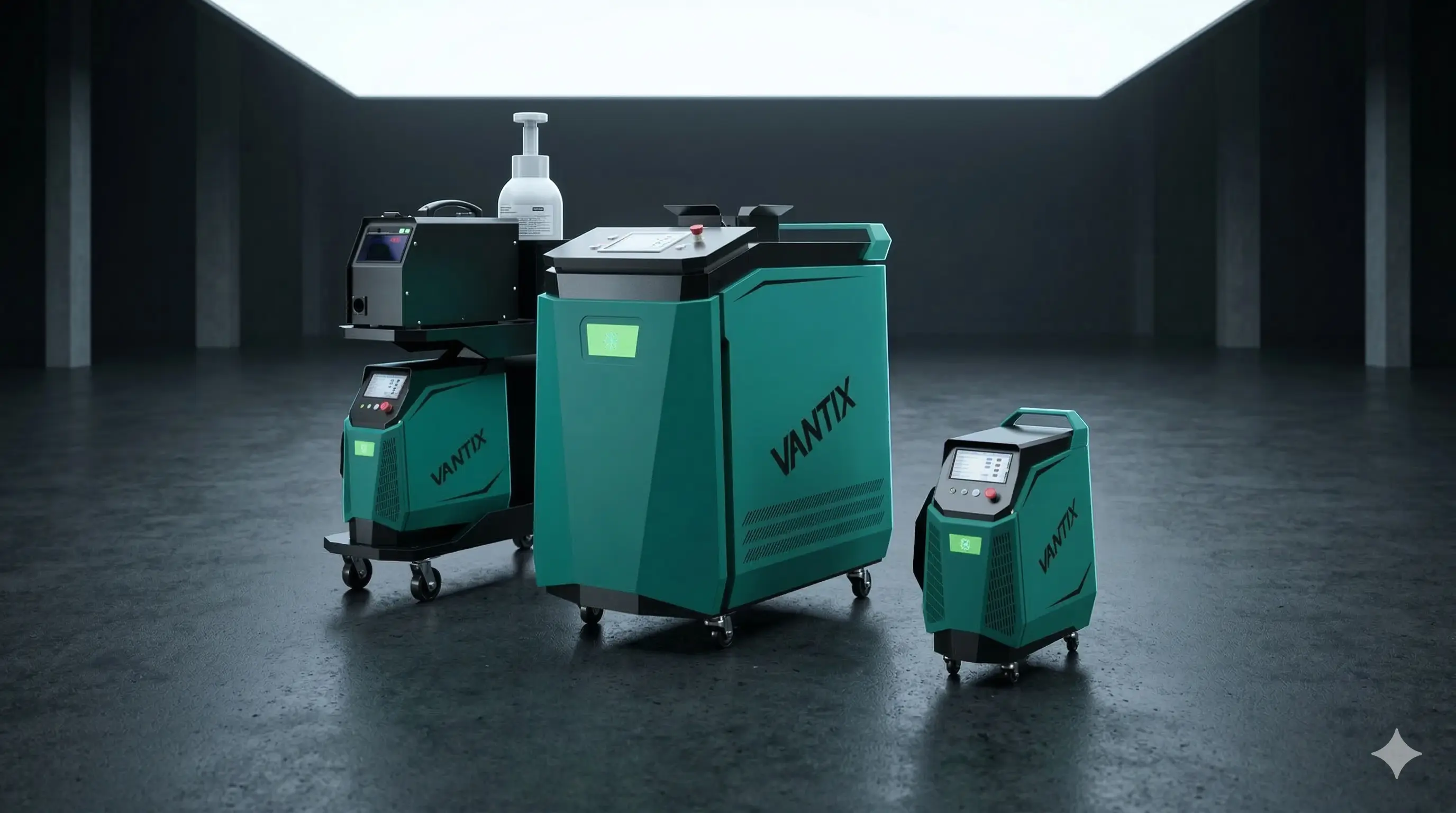
What the specs say: handheld laser welding at 1.5, 2 and 3 kW welds to 6, 8 and 10 mm, using a 4-in-1 head that welds, cleans, light-cuts and seam-cleans. The air-cooled head weighs about 0.58 kg.
Parts & Materials

The Spool Shop's Bill of Materials

Industry-side data with sources shown. Material specs are the governing ASTM/ASME/CSA designations; the verified wall-thickness anchors come from an ASME B36.10/19 dimension table. Whether a given Vantix machine handles a given part is answered only from Vantix's published specs, further down.
Pipe spools (ASME B31.3 process piping)
ASTM A106 Gr B / A53 Gr B carbon steel; A333 Gr 6 low-temp; A312 TP304/316L stainless; A335 P11/P22 chrome-moly · verified walls: NPS 2 Sch 40 = 3.91 mm, Sch 80 = 5.54 mm; NPS 6 Sch 40 = 7.11 mm, Sch 80 = 10.97 mm, Sch 160 = 18.24 mm
Cut and bevel, fit, root and fill weld by pressure welders, pre- and post-weld clean
Fittings and flanges
A234 WPB elbows, tees, reducers; A105 weld-neck flanges; branch olets, matched to pipe schedule
Welded to the spool; fitting designs are the things that carry CRNs, see the compliance section
Skid base frames and oilfield skids (separator, dehy, metering/LACT, pump and compressor packages)
CSA G40.21 350W structural steel: W-shapes, channel, HSS and plate, with webs, flanges and plate commonly in the 6 to 25 mm band
Profile and cope cutting, drilling and slotting, welding, cleaning for coating
Pipe racks, modules, platforms, ladders and handrail, gussets, baseplates
CSA G40.21 350W under CSA S16-governed design; gussets and baseplates commonly 6 to 20 mm
H-beam and profile cutting; welding under CSA W47.1/W59
Pressure vessel components (shells, heads, nozzles, repads, saddles)
SA-516 Gr 70 plate, sour-service work often normalized and HIC-tested; SA-106 B nozzles; plate spanning roughly 6 to 50 mm with MAWP and diameter
Nozzle and repad cutting; welding stays inside ASME Section VIII shops; cleaning for NDE
Wellhead and drilling equipment refurbishment · tanks (API 650) and containment
Alloy and carbon steels; A36 / 44W tank plate, shell courses typically 5 to 12 mm
Laser cleaning candidate: rust, scale and coating removal before inspection and recoat
The pattern across that table is the point: this industry's cutting lives mostly between 3 and 25 mm, squarely inside fiber-laser range, with higher power carrying the 20 mm-plus plate. Heavy pressure welds stay where Alberta law puts them, with certified pressure welders inside a permitted quality program; nothing on this page suggests otherwise.
Compliance

The Compliance Map, Drawn the Way ABSA Draws It

Every obligation below is yours, the fabricator's, or your welder's. None of them ever attaches to a cutting or welding machine, and a vendor who implies otherwise is telling you something about the vendor. Primary source for the Alberta rows: ABSA's AB-518, Pressure Piping Construction Requirements, and ABSA's published fee schedule effective November 1, 2025.
CRN (Canadian Registration Number)
The design, per CSA B51
Issued for boiler, pressure vessel and fitting designs, jurisdiction by jurisdiction, through ABSA in Alberta. Not for machines, and, in Alberta, not for piping packages either.
PP number (Alberta pressure piping design registration)
Your piping design
AB-518, near-verbatim: in addition to CRNs, Alberta issues provincial design registration numbers for pressure piping (PP numbers), special designs (ALDs) and welding procedures (WPs). A spool package gets a PP number, not a CRN. Design surveys bill at $163.50/hr; WPS registration is $163.50 flat.
Certificate of Authorization Permit (CAP)
Your shop
PESR Section 11: construction and repair of pressure piping must be done by a CAP holder. Issued after a quality-management-system audit; QMS application fee $1,253.50, audits billed at $163.50/hr with a 4-hour minimum.
Grade B / C Pressure Welder
The individual welder
Under the Pressure Welders Regulation, a B or C pressure welder may only weld pressure equipment while employed or contracted by a CAP holder and working to its WPSs. Grade B exam: $206.40 application and test plus $76.05 facility and coupon fee; Grade C $282.40.
CSA W47.1, Divisions 1/2/3
Your shop, for structural steel
Required through CSA S16 Clause 24.3 for fabricators and erectors welding S16 structures; administered by the CWB Group. Division 1 employs a full-time P.Eng for welding, Division 2 retains one part-time, Division 3 requires none. Cite W47.1/W59 together: W59 is the workmanship code the supervisor is examined on.
ASME B31.3 vs CSA Z662
Your contract, before your shop
B31.3 is the process-piping code most Alberta spool shops fabricate to, adopted through the PESR. CSA Z662 governs oil and gas pipeline systems with its own welding-qualification regime under its section 7. They are different regimes; do not staff or quote one as the other.
The one-liner worth pinning above the estimating desk: codes certify designs (CRN, PP), shops (CAP, W47.1) and welders (Grade B, PQ cards), never the machine. A laser does not need a CRN, and a laser vendor cannot sell you one that has it. What equipment can legitimately do is support the program: repeatable, traceable cut and bevel quality inside your WPSs and QMS.
Vantix's part of that bargain is documentation, not certification: electrical and laser safety documentation is model-specific, so have the compliance package named on the quote, model by model. For how these obligations look from the machine side, see the certifications and compliance page.

Plasma Tables, Weld Hours and Blast Rooms: the Sourced Numbers

Cutting first, with the concession up front. Hypertherm publishes that a complete XPR300 plasma system on a quality cutting machine, cutting 25 mm at more than 1,900 mm/min, costs somewhere between $175,000 and $225,000, that a comparable laser system can easily cost three to four times more, and that plasma is especially advantageous above 16 mm. At 25 mm it claims a 170-amp X-Definition process cuts twice as fast as a 4 kW fiber laser on oxygen. All of that is the plasma OEM's own framing, and below roughly 16 mm, where most spool, skid and gusset work lives, even that framing concedes the contest: fiber laser holds 0.2 mm tolerances against plasma's roughly 0.25 mm, with no electrode and nozzle line item.
Welding is measured in this industry in diameter-inches, so here it is in diameter-inches: the published North American baseline is 60 to 80 factored diameter inches per shift per welder, 85 to 100 in very productive shops. One mechanical contractor's published anchor for a single large-bore joint: a 16 in schedule 10 weld took two and a half hours manually. Every FDI a shop adds per shift without adding a scarce ticketed welder is the number an equipment ROI has to speak to.
Handheld laser welding's published economics sit strictly on the non-code side of the shop: brackets, guards, enclosures, skid sheet metal, tack and fit-up work. IPG publishes 4× faster than TIG for its handheld systems; Vantix publishes the same multiple against MIG/TIG for its own line, with operators trained in days. Registered pressure joints stay with Grade B welders inside a CAP holder's program, and this page will not pretend otherwise.
Cleaning: under AMPP-governed coating contracts, blasting to SSPC-SP 10 remains the specified method, and a laser page should say so. Laser cleaning's case is the work around the blast room: weld-seam oxide removal before NDE, weld-zone prep before coating, and refurbishment of drilling and completions equipment, with no abrasive embedment and no media stream. Vantix publishes surface prep up to SP-10 on its cleaning line.
Plasma system, 25 mm class
$175,000 to $225,000
Hypertherm's published XPR300 anchor; comparable laser 3 to 4× more
Plasma capital vs fiber laser
Typically 2 to 5× less
Hypertherm, same source
Where plasma keeps its edge
Above 16 mm; 2× speed at 25 mm vs 4 kW laser
Hypertherm; high-kW systems change this picture, and Vantix's own thickness claims come only from its sheets
Tolerances
Laser 0.2 mm vs plasma ~0.25 mm
Hypertherm's published gap
Pipe-shop baseline
60 to 80 FDI per shift per welder
Novarc; 85 to 100 in very productive shops
Fiber laser operating side
Reported ranges only
Vendor-published figures (roughly US$20 to 70/hr blended, nitrogen $15 to 25/hr bottled vs ~$2 generated) are directional, not OEM data; ask Vantix for measured numbers on your material
Labour

What a Weld Hour Costs in Alberta

Wages are Government of Canada Job Bank data (occupation reports 23242 and 21460, survey periods 2023 to 2024) and Alberta's alis 2023 Wage and Salary Survey, retrieved 2026-08-14. Hourly CAD.
Welders, Alberta
$38.00
Low $25.00, high $52.18; 88.8% receive at least one non-wage benefit
Welders, Edmonton
$39.90
High $54.00
Welders, Wood Buffalo–Cold Lake
$45.00
High $72.00: the turnaround labour market every fab shop bids against
Steamfitters/pipefitters, Alberta
$44.90
alis average $43.44/hr, $91,951/yr
Platework fabricators and fitters, Alberta
$33.77 average
76% of employers recruited over the survey's two-year window; 56% reported hiring difficulty
Welder supply, Canada
Moderate risk of shortage, 2024 to 2033
90,900 employed (2023); 26% aged 50 and over; median retirement age 64
The back-of-envelope every estimator already runs: an Edmonton shop-floor weld hour at the median, near $40, lands above $50 with statutory burden before overhead. At the published 60 to 80 FDI per shift, each diameter-inch carries real labour cost, and the 76% and 56% hiring numbers say that cost is rising. The pipeline into the trade is a three-year apprenticeship, 1,560 on-the-job hours plus eight weeks of technical training per year in Alberta, and the pressure ticket on top of it runs through ABSA's Grade B exam.
Vantix's published answer, scoped to where it applies: the welding sheet's hiring math prices qualified TIG welders at $75 to $110K a year plus benefits plus months of training, against a handheld platform at 4× MIG/TIG speed, trained in days, from $32,000 CAD, with the 2 kW air-cooled at $42,000 and the 3 kW at $52,000 and weld penetration published at 6, 8 and 10 mm. That is non-code shop capacity you can hire this quarter; it is not, and is never sold here as, a Grade B welder.
See our handheld laser welding machines

Equipment for Energy Fabrication

Published Numbers, Not Adjectives

5 in
maximum steel thickness at 60 kW (127 mm)
±45°
bevel range, structural profile head
200 ft
maximum modular bed length
48 hrs
on-site response, Alberta included
Pipe spool fabrication in an Alberta shop

What an Energy Buyer Should Confirm

Pressure and welded work in this sector carries obligations that no equipment vendor carries for you. These questions apply to every supplier, us included.
  • Know which number your work actually needs. CRNs attach to boiler, pressure vessel and fitting designs; in Alberta a pressure piping package is registered with a PP number, and both run through ABSA, with Technical Safety BC as the BC counterpart. Neither ever attaches to the machine that cut the parts.
  • Welding certification stays with your shop. CWB certification to W47.1 covers your procedures and your welders. If you are introducing a laser process, raise it with the Bureau before the machine arrives, not after.
  • Get the compliance package model by model, in writing. Electrical and laser safety documentation is model-specific, so have it named on the quote.
Learn About Financing
Geography

Nisku to the Heartland to Grande Prairie

This page's buyer mostly works within an hour of the QEII. Nisku Business Park in Leduc County runs more than 7,000 acres about 25 km south of Edmonton, and with the adjoining Leduc Business Park it is described by Leduc County as the second-largest energy manufacturing industrial park in North America and the largest in Canada; the circulating figures of a thousand businesses and tens of thousands of workers are the county's own and are attributed as such.
A detail that says more than any brochure: the Canadian Welding Bureau's own Alberta test laboratory sits inside the park, at 206 19th Ave in the Nisku Industrial Park, with radiographic plates evaluated at Applus Edmonton. Weld coupons from half of Western Canada literally ship to Nisku. The demand sink for the corridor's spools, modules and skids is Alberta's Industrial Heartland northeast of Edmonton: a 582 km² industrial zone with $50 billion in capital investment and 40-plus operating companies on the association's own figures, anchored recently by Dow's $8.9 billion net-zero petrochemical complex.
North and west, Grande Prairie is the service and fabrication hub for the Montney and Duvernay plays; the Duvernay alone underlies roughly 130,000 km², about a fifth of Alberta, on the city's own economic development figures. Wood Buffalo–Cold Lake pays the province's highest welder wages, the $45 median from the labour section, which is exactly the market corridor fabricators lose welders to. All of it sits inside the committed 48-hour on-site area, with Calgary and Edmonton named primary service areas; the Alberta service page carries the full commitments.
See the Alberta service page
Bodies worth naming because your customers name them: ABSA, the pressure equipment safety authority; the CWB Group; CSA Group, author of B51, S16, W59 and Z662; Skilled Trades Alberta; the AER; Enserva, formerly PSAC; CAOEC for the drilling contractors; the Canadian Institute of Steel Construction; and AMPP, formerly NACE/SSPC, whose SSPC-SP 10 standard the cleaning section already named. A supplier who can hold a conversation in that vocabulary is a supplier who has stood in one of these shops; a machine buyer deserves both.
FAQ

Frequently Asked Questions

Does a pipe spool need a CRN?

In Alberta, no: ABSA's AB-518 is explicit that CRNs are issued for boiler, pressure vessel and fitting designs, while pressure piping design registrations receive Alberta PP numbers. The spool package needs a PP number under a Certificate of Authorization Permit holder's program. No cutting or welding machine carries either, in any province.

Can a handheld laser welder do pressure work?

Not registered pressure joints. In Alberta those belong to Grade B or C pressure welders employed by a CAP holder, working to registered WPSs. Vantix positions handheld laser welding, published at 4× MIG/TIG speed and trained in days, for the non-code side of an energy shop: brackets, guards, enclosures, skid sheet metal and fit-up. Introducing any new process into a certified shop is a conversation with your certifying bodies first.

Is Alberta inside Vantix's on-site service area?

Yes. Alberta, with Calgary and Edmonton as named primary service areas, sits inside the published 48-hour scheduled on-site commitment for Western Canada, with next-day availability for production-down emergencies, parts shipped 1 to 3 days from stock in Lumby, BC, and a 24/7 engineer-answered line on 778-907-9796.

Laser or plasma for skid and structural plate?

Honestly: both have a case, and the boundary is thickness. The plasma OEM's own published position is that plasma is especially advantageous above 16 mm and typically costs 2 to 5 times less up front; below that band, where most spool, skid and gusset work lives, fiber laser wins on tolerance, edge quality and consumables. Vantix's published cutting figures run 3 to 60 kW with steel to 5 in at 60 kW.

What does certification actually cost an Alberta spool shop?

Published anchors from ABSA's fee schedule effective November 1, 2025: QMS application $1,253.50 with audits at $163.50 per hour, Grade B pressure welder exam $206.40 plus a $76.05 facility and coupon fee, WPS registration $163.50, design surveys $163.50 per hour. CWB structural certification to W47.1 carries a base fee of $1,740 per year. These are your shop's obligations; equipment never carries them.

Run Your Material First

Bring a drawing and a piece of your actual plate to the Lumby showroom and watch it cut before you sign anything. Call 778-907-9796 or book a time.