Laser Solutions for Metal Fabrication Shops

Jobs backing up. Outsourcing eating margins. Competitors winning bids. Cut faster, bring more work in-house, and compete at any scale.
Fiber laser cutting sparks on a Canadian metal fabrication shop floor
We Understand Fabrication
Job shops live on flexibility. You run a different job every hour. Customer specs vary wildly. Schedules change daily. And your equipment needs to keep up.
When Equipment Holds You Back
Meanwhile, that aging laser is holding you back. Cycle times are too long. Maintenance eats production days. And when something breaks, parts ship from overseas.
Vantix Changes the Equation
Faster cutting. Local support. Equipment configured for high-mix production. You compete on capability, not just on price.
Answers to Fabrication Challenges
Watch the Vantix process
Vantix fiber laser demonstration video
Production Bottlenecks
Your old laser can't keep pace with order volume. Jobs queue up. Lead times stretch. Customers start looking elsewhere.

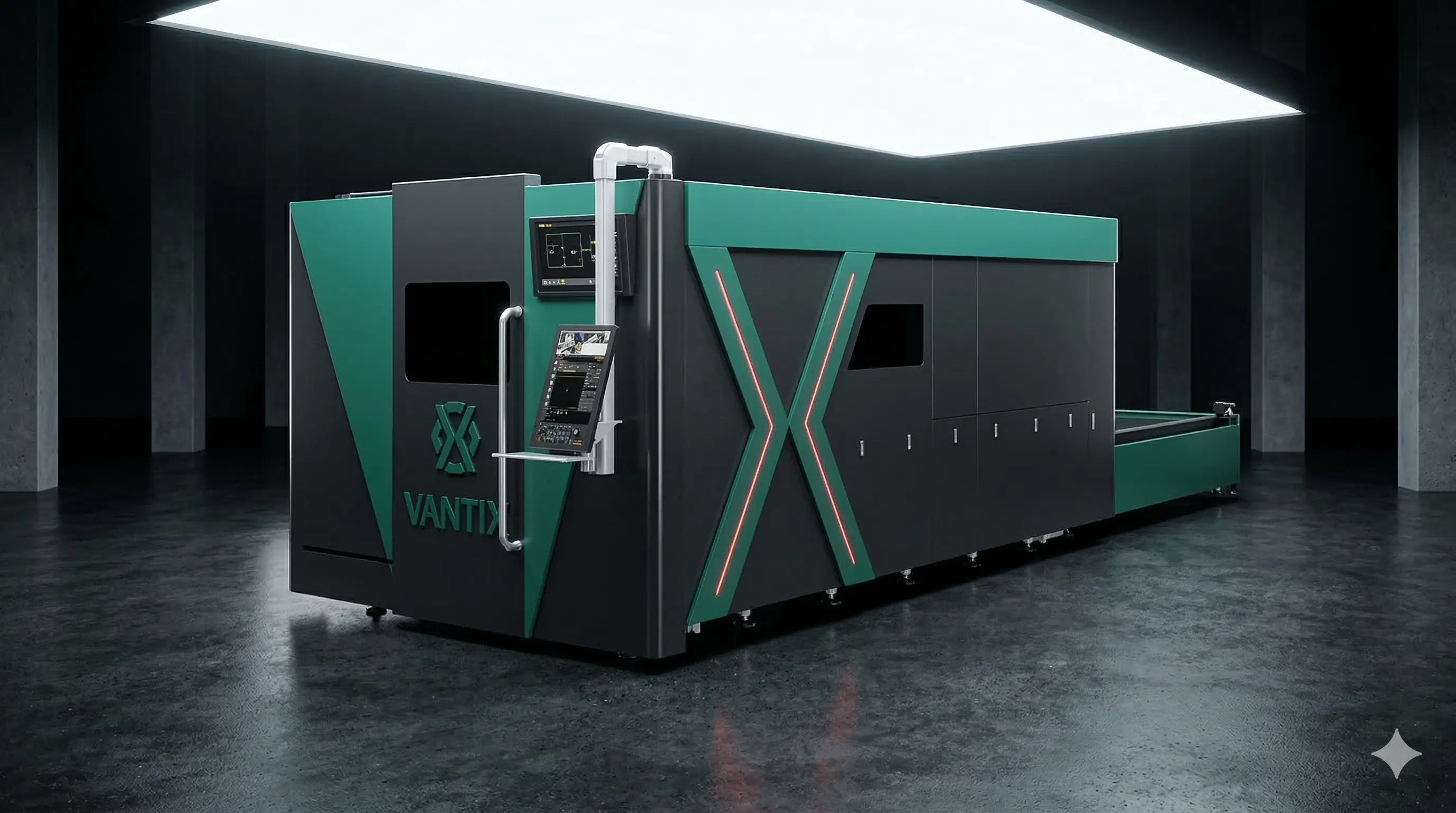
How Vantix helps: 3 to 60 kW fiber laser systems cut steel, stainless and aluminum up to 80% faster than plasma. Clear the backlog. Shorten lead times. Win repeat business.
Outsourcing Costs
Every time you send tube cutting or specialty work out the door, you lose margin and control. Most shops pay a 15–25% markup on outsourced tube work.

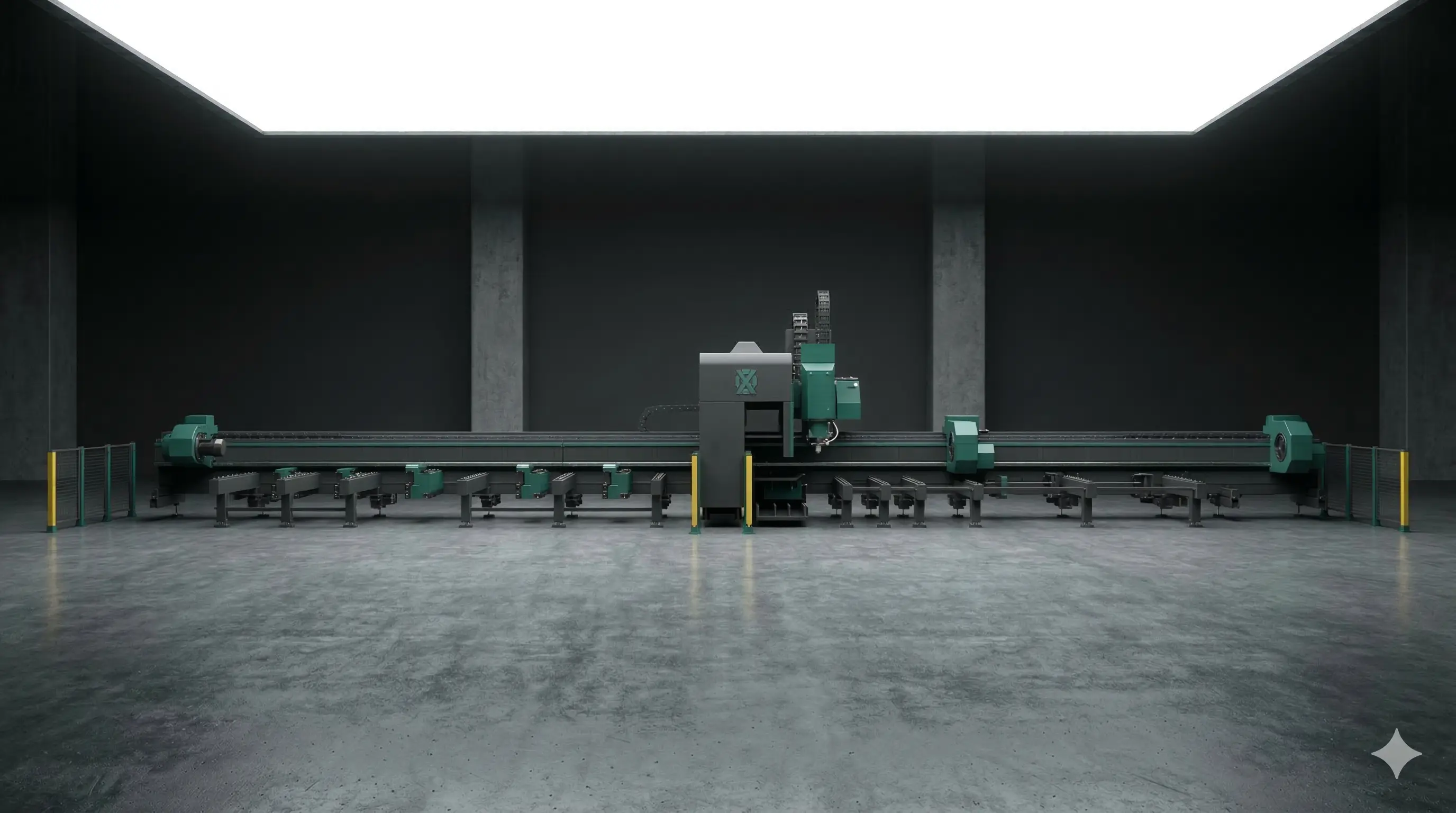
How Vantix helps: bring tube cutting in-house with dedicated tube laser systems. That markup stays in your pocket. Full arithmetic below.
Skilled Labour Shortage
Finding experienced welders is nearly impossible. Training takes months. And the good ones command premium wages.

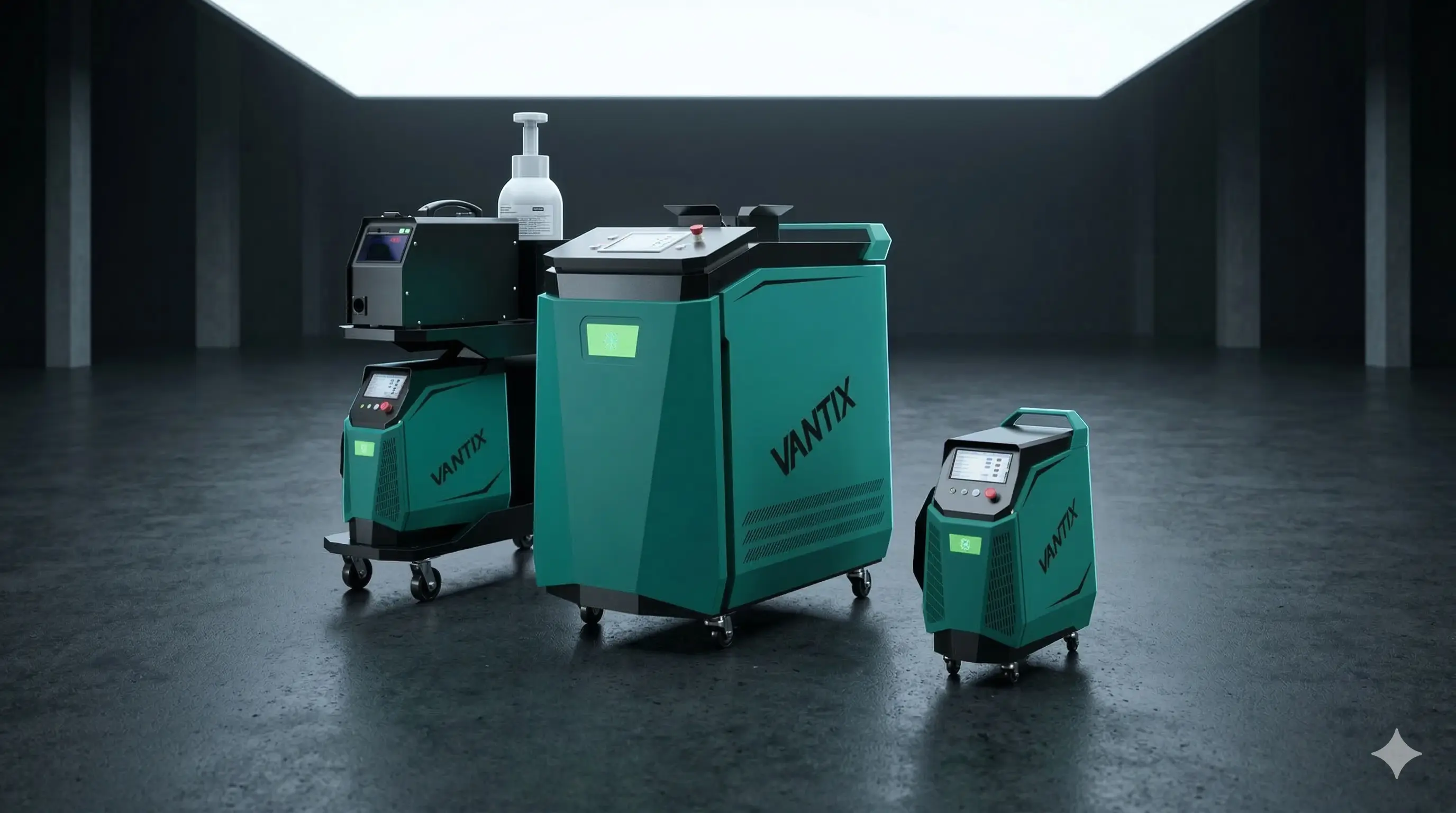
How Vantix helps: handheld laser welders run at 4× MIG/TIG speed, with operators trained in days, and clean welds that skip post-weld finishing.
Equipment Support
When your machine goes down, you can't wait weeks for an overseas technician.

How Vantix helps: engineers based in BC, parts stocked in Lumby, a 24/7 Canadian hotline, same-day remote diagnostics, and 48-hour on-site response in Western Canada.
The Work

The Work That Comes Through a Canadian Fab Shop

Every line below is the day-to-day work mix of Canadian fabrication, described in the trade's own vocabulary. Where a Vantix machine changes the economics of that line, the rest of this page shows the arithmetic.

Structural steel
Base plates, gusset plates, stiffeners, cap and splice plates, wide-flange beams and columns, HSS bracing, connection cleats. Typical materials: CSA G40.21 350W and 300W plate, ASTM A992 W-shapes, ASTM A500 HSS. Plate commonly runs 6 to 50 mm; HSS walls 3 to 13 mm.
Cut today on plasma or oxyfuel with a beam drill line; welded SMAW/FCAW in shops certified to CSA W47.1.
Agriculture and heavy equipment
Bucket edges and shrouds, loader arms, boom plates, wear plates, sprockets, auger flighting, quick-attach plates. Materials: G40.21 350W and 44W, AR400 and AR500 wear plate, commonly 6 to 32 mm.
Cut on plasma or oxyfuel, welded MIG/FCAW, refurbished by sandblast and paint.
Truck, trailer and transport
Frame rails, cross-members, kingpin plates, landing-gear brackets, deck sheets, fender brackets. High-strength low-alloy sheet and plate, aluminum 5052 and 6061 for bodies; sheet 1.5 to 6 mm, rails 6 to 12 mm.
Cut on plasma or punch, MIG welded, media blasted before refinish.
Architectural and miscellaneous fab
Stair stringers, handrail, balusters, brackets, signage blanks, decorative panels. Mild steel, stainless and aluminum sheet, 1 to 10 mm.
Plasma or waterjet cut, TIG/MIG welded, powder coated.

Vantix's published capability set covers this mix: fiber sheet cutting from 3 to 60 kW handling steel to 5 in, stainless to 3.5 in and aluminum to 2.5 in at 60 kW; tube and profile cutting to 48 ft lengths and 40 in diameters; structural profile processing with a ±45° bevel head; and handheld welding to 10 mm at 3 kW. If your work mix leans structural, the dedicated structural steel fabrication page goes deeper.

What Your Plasma Table Actually Costs to Run

Plasma's purchase price is the cheap part. A conventional mechanized plasma system runs roughly USD $15,000 to more than $20,000, and high-definition class systems USD $50,000 to $65,000 before the table (Hypertherm, 'How much is a plasma cutter?', https://www.hypertherm.com/resources/more-resources/blogs/how-much-is-a-plasma-cutter/, retrieved 2026-08-14). The operating cost lives in consumables and rework.

Consumables: a genuine Hypertherm electrode sells in Canada at $89.99 for a 5-pack, about $18 each, and the electrode is only half the wear set (Welding Depot Canada product page, https://weldingdepot.ca/hypertherm-electrode-220842-for-power-max-5-pack/, retrieved 2026-08-14). Budget air-plasma units can burn through consumables in as few as 120 to 250 starts, where modern high-definition systems run past 1,000 (Piranha, 'Why High-Definition Plasma Cutting Is Worth the Cost', https://piranhafab.com/feeds/blog/high-definition-plasma-cutter, retrieved 2026-08-14). Your real cost per hour is the wear-set price divided by its arc-on life; run that division for your own logs.

Rework: Piranha's own breakeven case prices grinding labour at $30 an hour, with conventional-plasma parts needing 15 extra minutes of finishing each. At 200 parts a week that is roughly 50 hours, about $1,500 of labour, every month (same Piranha source). Edge quality is a labour line item, not an aesthetic.

Where fiber fits: Vantix publishes up to 80% faster cutting than plasma on its 3 to 60 kW FLC line, with ±0.03 mm positioning accuracy and a stress-relieved welded steel bed built for 3-shift production (source: sheet-01). Run the comparison against your plasma table on the plasma vs laser page, and put your own numbers through the ROI calculator.

The Outsourcing Leak

Vantix's tube and profile spec sheet states it plainly: most shops pay a 15–25% markup on outsourced tube work (source: sheet-02). That markup is the outsourcer's margin on your job, and it compounds with freight, queue time you don't control, and re-cuts on parts that arrive wrong.

Illustrative arithmetic, not a quote: a shop sending out $200,000 of tube work a year at the published markup range is handing over $30,000 to $50,000 annually before counting freight or schedule risk. Run your own purchase ledger through the same multiplication; it is usually the fastest business case in the building.

In-house, the TPC line cuts tube to 48 ft and 40 in diameter with miter cuts, copes, hole patterns and notches already in place, so parts come off the machine weldment-ready with no secondary ops (source: sheet-02). Same-day turnaround happens when tube cutting lives in your shop, not someone else's queue (source: sheet-02, closing panel). The full configuration breakdown is on the tube and profile laser cutting page.

Laser-cut steel tube sections with copes and holes complete, ready for welding
Labour

The Welder Math Every Canadian Shop Is Doing

Every figure in the rows below is from the Government of Canada Job Bank, the CWB Group, Skilled Trades Ontario, or a named training provider, retrieved 2026-08-14. This is the labour market your equipment decisions live inside.

$30.00/hr national median welder wage
Alberta $38.00, BC $35.00, Saskatchewan $32.00, Ontario $28.00 (Government of Canada Job Bank, Welder NOC 72106 wage report, https://www.jobbank.gc.ca/marketreport/wages-occupation/23242/ca, wage data 2023–2024, page updated 2025-11-19). The Western premium is the labour-cost story for Western fab shops.
47% of welding employers name the shortage of qualified workers as their most pressing issue
and 41% flag the aging workforce (CWB Group, Overview of the Employment Landscape in the Welding Industry, 2024 survey, https://www.cwbgroup.org/resources/articles/overview-of-the-employment-landscape-in-the-welding-industry).
25,600 job openings vs 25,000 job seekers, 2024 to 2033
driven primarily by retirements; welder employment has declined an average 1.3% a year over the past decade (CWB Group, Welding Post-secondary Education & Apprenticeship Snapshot, https://www.cwbgroup.org/resources/reports/welding-post-secondary-education-and-apprenticeship-snapshot). Job Bank's national outlook rates the trade a moderate risk of shortage, with 26% of welders aged 50 or older (Job Bank outlook, NOC 72106, https://www.jobbank.gc.ca/marketreport/outlook-occupation/23242/ca).
6,000 hours to a ticket in Ontario
the Welder (456A) apprenticeship is 5,280 on-the-job hours plus 720 in school, roughly three years (Skilled Trades Ontario, https://www.skilledtradesontario.ca/trade-information/welder/).
$299 to $499 per CWB test cycle, repeating every two years
test-centre example pricing at Okanagan College, BC (https://www.okanagancollege.ca/trades-and-apprenticeship/welding/weld-testing-and-upgrading); a CWB qualification is valid two years and only while employed with a certified company (CWB Group, Welder Qualification Testing, https://www.cwbgroup.org/services/certification/welder-qualification-testing).

Against that market, Vantix's welding sheet makes its argument in one line: qualified TIG welders cost $75,000 to $110,000 a year plus benefits plus months of training, while a Vantix handheld starts at $32,000 CAD and runs on operator-level wages after days of training (source: sheet-03). The full published ladder is $32,000 for the 1.5 kW handheld, $42,000 for 2 kW air-cooled, $52,000 for the 3 kW platform, all CAD (source: live /laser-welding-machines, fetched 2026-08-14).

The speed claim is corroborated outside Vantix's own material: SMACNA, the sheet metal contractors' association, states laser welding exceeds TIG speed by 4X or more, and pegs manual laser welding's sweet spot at very thin material up to roughly 5/16 in, with MIG still the better tool beyond that (SMACNA, 'MIG & TIG vs. Laser Welding', 2024-11-26, https://www.smacna.org/news/news-archive/article/2024/11/26/mig-tig-vs-laser-welding). Manual TIG travel speed is 4 to 6 inches per minute (Haynes International GTAW guide, https://haynesintl.com/en/alloys/welding-and-fabrication/welding-and-joining/gas-tungsten-arc-welding-gtaw-tig/). Where your work is heavy structural weldment, keep the MIG bays; where it is thin sheet, trim and finish work, the laser takes the queue.

One scoping note a certified shop will ask about: CSA W47.1 certification belongs to the company, and CWB tickets qualify welders per process and position. How handheld laser welding fits inside a W47.1 shop's qualification system is a genuinely under-documented question; we wrote up what is actually published in our guide to laser welding in a CWB-certified shop.

Equipment for Fabrication Shops

Shops that prep welds or strip coatings also run Vantix laser cleaning: contaminant-free joints on the first pass, no grit, no chemical runoff (source: sheet-04, “Weld prep — contaminant-free joints on the first pass”). The one customer Vantix names in print used it on the Spirit of Kamloops locomotive restoration.

The Numbers That Matter for Fab Shops

80%
faster cutting than plasma
15–25%
published markup range on outsourced tube work, recovered by cutting in-house
faster than MIG/TIG welding, trained in days
48 hrs
on-site service, Western Canada
Compliance

Who Carries Which Certification in a Fab Shop

Fabrication compliance is a stack of obligations that sit with different parties. Knowing which is which keeps a machine purchase from being oversold or underscoped.

The machine
carries product-level laser compliance: laser products in Canada fall under Health Canada's Radiation Emitting Devices Regulations. Ask any vendor, Vantix included, to walk you through the compliance documentation for the specific model you are quoted.
The shop
carries CSA W47.1 certification for fusion welding of steel, administered by the CWB Group, in Division 1, 2 or 3 depending on engineering supervision. It certifies the company, not any machine and not any individual.
The welder
carries the CWB ticket, qualified per process and position, valid two years, and only while employed with a certified company.
The workplace
carries laser-safety duties under provincial OHS law. Ontario, for example, classes 3B and 4 lasers as capable of injuring skin or eyes from direct or reflected exposure and requires training, a competent supervisor, and every reasonable precaution, with ANSI Z136.1 listed as guidance.

What Vantix publishes about its own documentation package is on the certifications and compliance page.

Financing That Fits Fabrication

Capital equipment shouldn't drain your operating account. Flexible financing options let you:
  • Preserve cash for materials and payroll
  • Match payments to equipment productivity
  • Expand capability without cash flow stress

On price positioning, Vantix's own brochure puts its pricing at roughly 60 percent of the premium European brands (source: brochure), and its used-equipment comparison argues new, warrantied, financed machines are often cheaper per month than maintaining aging plasma or legacy lasers (source: brochure).

Learn About Financing
Industries

Where Your Shop Sits

Vantix's service commitments are published with a geographic qualifier and this page keeps it honest: 48-hour on-site response and 1-to-3-day parts delivery apply in Western Canada, where the Lumby, BC facility, parts stock and engineers physically are. East of Alberta, support is the 24/7 phone line, same-day remote diagnostics, and parts shipped from Lumby; on-site visits are arranged case by case, not committed in print. The full picture by province is on the 48-hour Western Canada service area page.


FAQ

Frequently Asked Questions

What does laser cutting equipment cost for a Canadian fab shop?

Vantix publishes CAD pricing where it exists: handheld laser welders at $32,000 for 1.5 kW, $42,000 for 2 kW air-cooled, and $52,000 for the 3 kW platform. Cutting systems are quoted to configuration because bed size and power vary widely; Vantix's own brochure puts its pricing at roughly 60 percent of the premium European brands. Every system includes a 2-year warranty.

Can a fiber laser replace a plasma table?

For most sheet and plate work, yes, with a speed gain: Vantix publishes up to 80% faster cutting than plasma across its 3 to 60 kW range, cutting steel to 5 in, stainless to 3.5 in and aluminum to 2.5 in at 60 kW. Plasma keeps a case at the very heavy end and lowest capital tier; the plasma vs laser comparison covers when each wins.

Do handheld laser welders work in a CWB-certified shop?

CSA W47.1 certifies the company and CWB tickets qualify welders per process and position, so bringing in a laser welder does not remove any of those obligations. How laser welding is qualified inside a W47.1 system is not yet fully answered in published guidance; our CWB and laser welding guide collects what is actually published.

How fast can a new operator run a laser welder?

Vantix's published figure is operators trained in days, at 4× MIG/TIG speed, and the claim has outside support: SMACNA reports laser welding exceeding TIG speed by 4X or more. TIG itself takes months to train and roughly 6,000 apprenticeship hours to a ticket in Ontario.

What support does a fab shop outside Western Canada get?

The published commitments are honest about geography: 48-hour on-site response applies in Western Canada. Everywhere in Canada gets the 24/7 engineer-answered hotline on 778-907-9796, same-day remote diagnostics, and parts shipped from stock in Lumby, BC rather than overseas.

See It In Action

Our Lumby showroom has equipment running and ready. Bring your materials. See them cut. Evaluate the results.