LASER CLEANING

Laser Cleaning Machines for Industrial Rust, Paint and Coating Removal

The old methods are messy, expensive, and damaging. Remove rust, paint, and coatings without chemicals, abrasives, or surface damage.

Precision cleaning. Zero waste.

What is a laser cleaning machine?

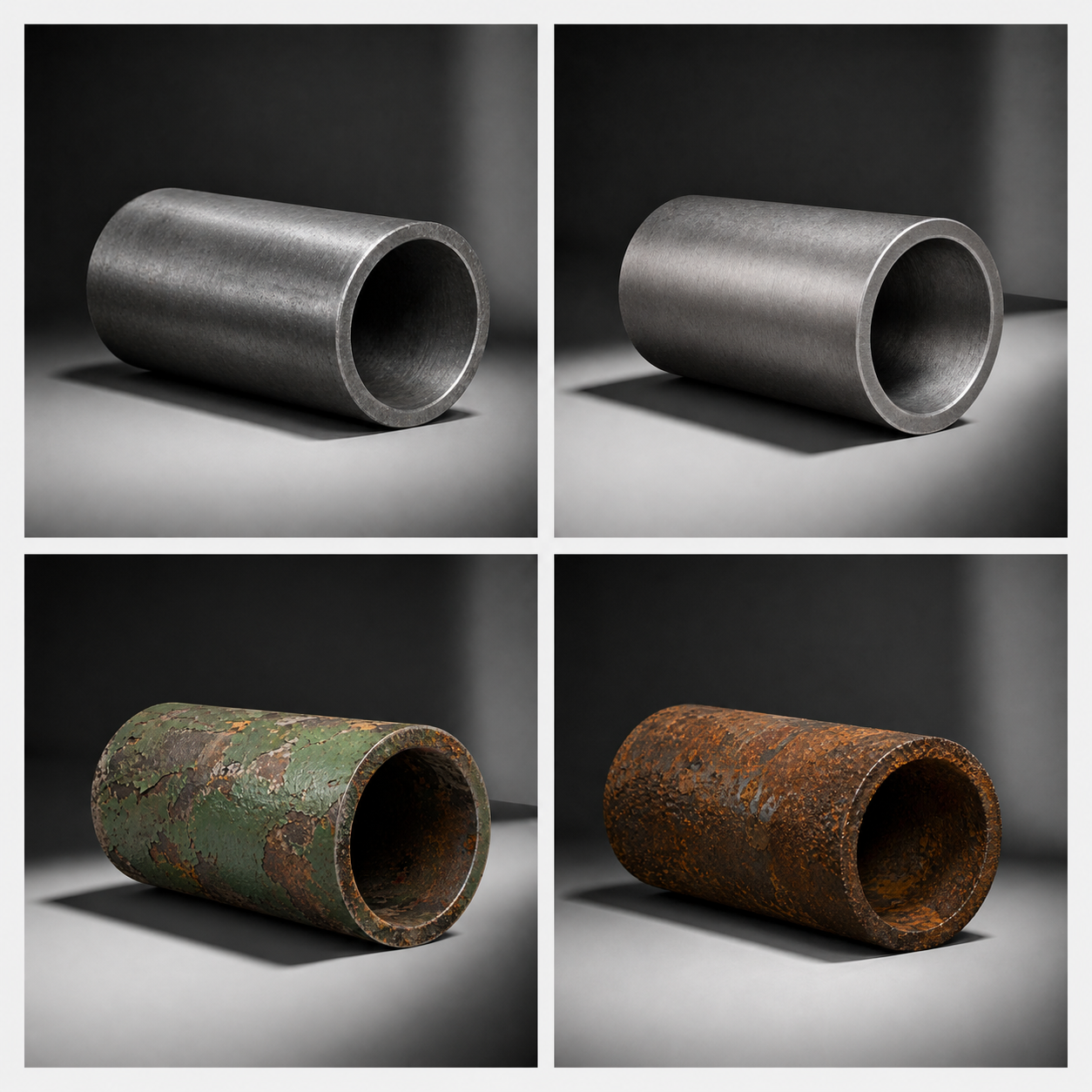
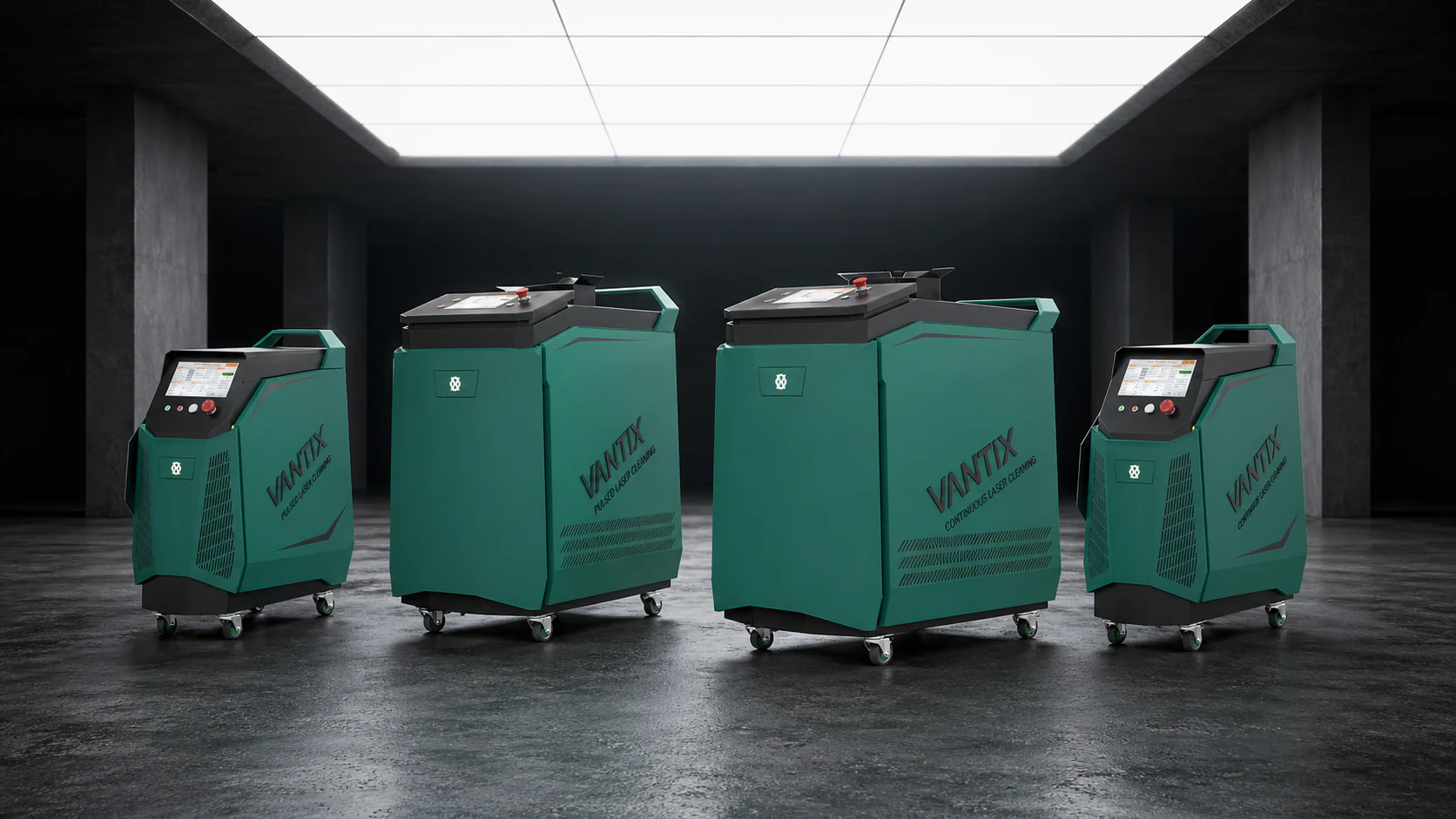
A laser cleaning machine removes rust, paint, oxide and coatings by vaporizing the contaminant layer while clean base metal reflects the beam, so the process is selective and chemical-free. Vantix supplies pulsed (200 W to 2000 W) and continuous (2 to 3 kW) systems from Lumby, BC.
  • Surface prep up to SP-10 near-white blast, without grit, chemicals or hazardous waste
  • Metals: steel, stainless, aluminum, bronze, titanium. Heritage substrates on pulsed: cast iron, stone, concrete, wood
  • 2-year warranty, spares stocked in BC, 24/7 Canadian hotline, 48-hour on-site in Western Canada

Why Laser Cleaning?

A laser cleaning machine replaces the tradeoffs traditional surface prep has trained you to accept:
Chemical stripping means hazardous waste, disposal costs, and exposure risks for your team. Sandblasting creates dust, consumes media, and can damage delicate surfaces.
Grinding and wire brushing remove material you want to keep and create inconsistent results.
Laser cleaning eliminates these compromises. The laser vaporizes contaminants while leaving the base material untouched. No chemicals. No media. No material removal. Just clean metal.

Case Study: Spirit of Kamloops 2141 Locomotive

When the Kamloops Heritage Railway Society needed to restore their historic 2141 steam locomotive, they faced a challenge. Traditional methods risked damaging irreplaceable heritage details. Chemical stripping was slow and created disposal challenges.

Vantix laser cleaning provided the precision solution.
Results:
  • Weeks of restoration work completed in hours
  • Delicate surfaces preserved
  • No chemical waste
  • Heritage details protected
"Saved a couple of weeks of work — completed in just three hours — on the Spirit of Kamloops restoration using Vantix laser cleaning. The precision was exactly what a heritage project demands." — Kamloops Heritage Railway Society, Kamloops, BC

Read the full Spirit of Kamloops 2141 laser cleaning case study

The specification page for the cleaning platform, covering both the continuous and the pulsed configurations.

If your cleaning work is mostly weld prep and seam clean-up, the handheld welding head covers those modes too.
How It Works

High-Powered Laser Interaction
High-powered laser pulses interact with surface contaminants: rust, paint, oxide layers, grease. The contaminant layer is vaporized instantly.
Selective Cleaning Process
The process is selective. The laser energy is absorbed by the contamination but reflected by the clean metal underneath. When the surface is clean, the process naturally stops.
Consistent, Controlled Results
Consistent, controlled surface preparation without the variables of traditional methods.

System Options

Continuous Cleaning Systems
Both continuous systems: integrated water cooling · max scan width up to 300 mm · "air knife" optics protection.
Continuous 2 kW
Balanced throughput for general industrial rust, paint and coating removal.
Continuous 3 kW
High-throughput continuous-duty option for larger areas and heavier contamination.
Pulsed Cleaning Systems
Pulsed 200 W
Precision-first option for sensitive surfaces and restoration detail work. Air-cooled.
Pulsed 300 W
Air-cooled precision at the top of the portable range. Restoration detail, mold work, heat-sensitive substrates.
Pulsed 500 W
First water-cooled step. Longer sessions and larger areas without thermal drift.
Pulsed 1000 W
Water-cooled throughput for batch processing and large-area removal at pulsed control levels.
Pulsed 2000 W
Higher pulsed output for faster precision cleaning while maintaining low thermal impact.

Continuous vs Pulsed Cleaning: Quick Selection Guide

Feature
Continuous
Pulsed
Best For
High-throughput industrial cleaning, large-area rust and coating removal
Precision cleaning, heat-sensitive surfaces, restoration detail work
Typical Power Range
2 kW and 3 kW continuous systems
200 W to 2000 W pulsed systems
Surface Control
Strong removal rate with adjustable airflow modes
Fine control with selectable scan patterns and pulse parameters
Integration Path
Manual + production workflow
Manual today, automation-ready interfaces for future integration

Applications

The Business Case
1
Eliminate Chemical Costs
No solvents to purchase. No hazardous waste disposal fees. No chemical storage requirements.
2
Reduce Consumables
No blasting media to buy, use, and dispose of. The laser is the only "consumable", and it lasts for years.
3
Protect Your Team
No chemical exposure. No silica dust. No respiratory hazards. Safer working conditions.
4
Environmental Compliance
No hazardous waste stream. No VOC emissions. Simplified environmental compliance.
5
Preserve Base Material
Unlike grinding or aggressive blasting, laser cleaning removes only what you want removed. No material loss. No surface damage.

How This Cleaning Platform Is Built

Laser cleaning is a precision process, and the difference between "cleaned the metal but damaged the substrate" and "cleaned it perfectly, every time" is in the airflow design, the beam control, and the scan pattern logic. Vantix offers two platforms on the same control architecture: continuous for throughput, pulsed for precision.

Here's what's inside both.
"Air Knife" Protection Design
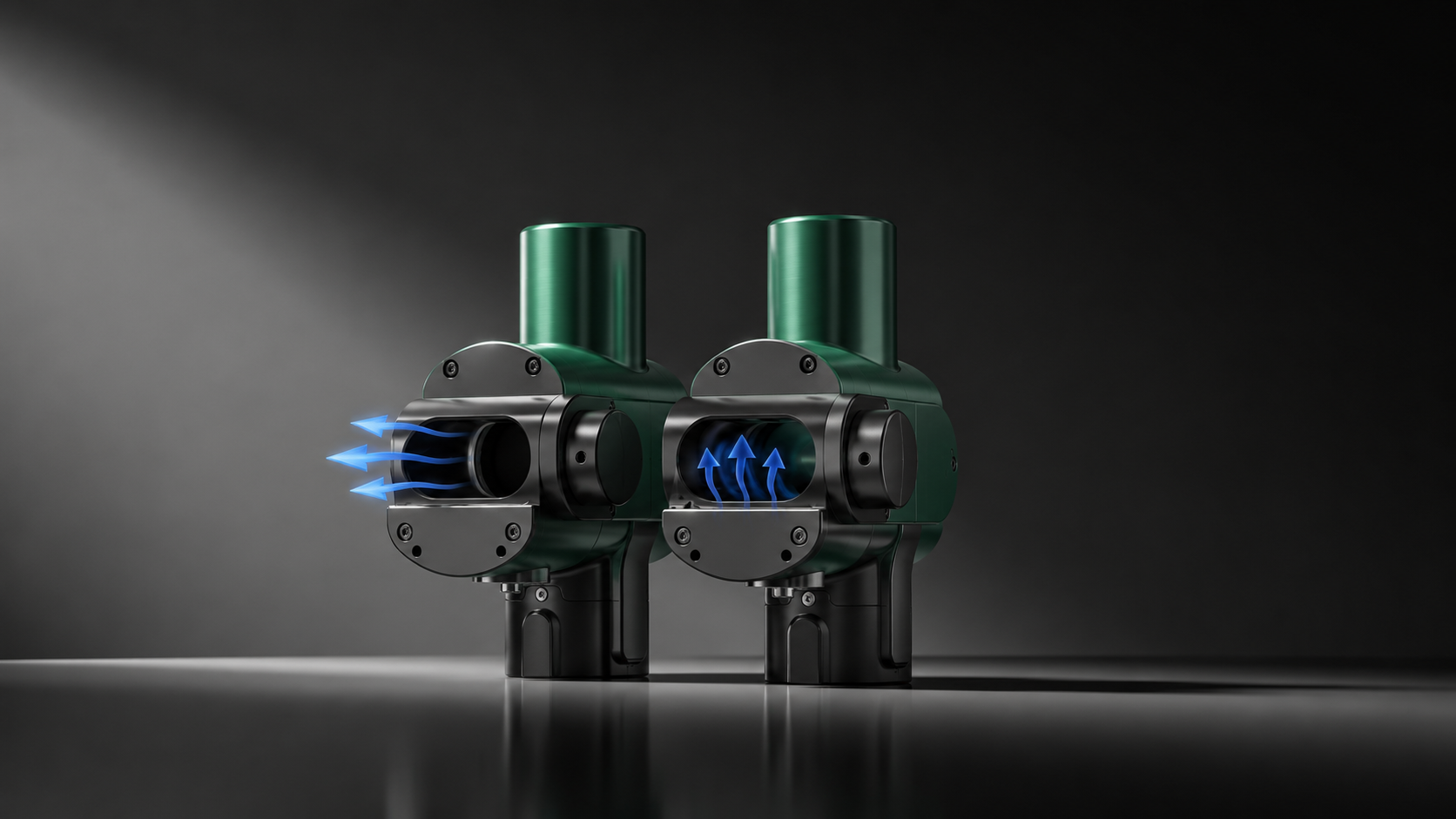
A specially engineered outlet structure forms a high-velocity protective airflow, an "air knife", right at the laser exit point. It maximizes protective gas flow efficiency, reduces lens contamination dramatically, extends optical component service life, and improves stability during long cleaning cycles. Why it matters: lens and protective glass are the most commonly replaced consumables on any cleaning system. Less contamination means longer service intervals and lower cost per hour of operation.
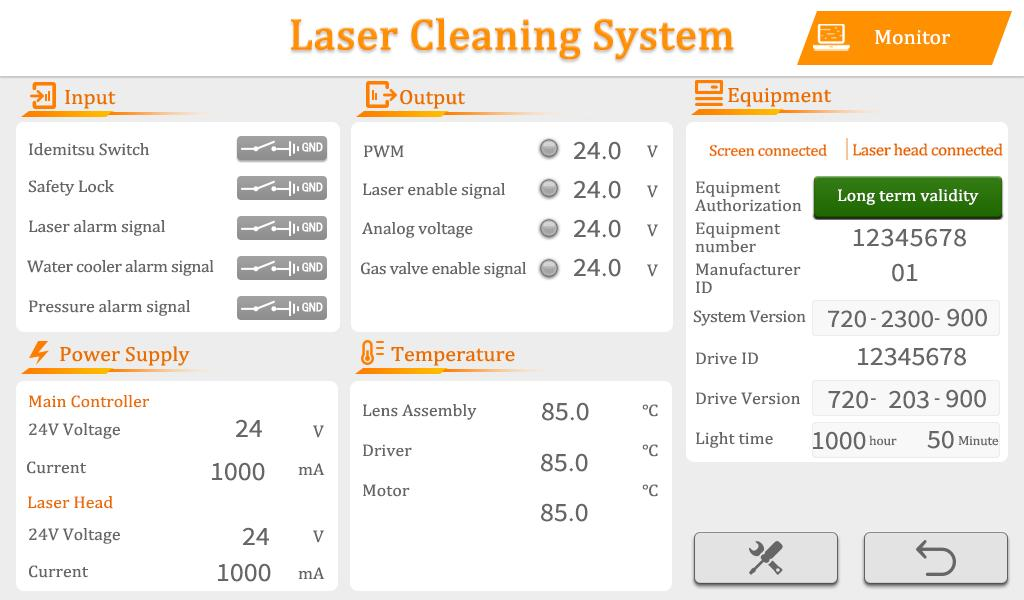
Touchscreen Control & Real-Time Monitoring
The continuous-series control system covers cleaning up to 3000 W with every key parameter visible and adjustable on the touchscreen interface: peak power, cleaning mode (pre-weld surface prep, oxide removal), scan width up to 300 mm, trigger mode, and pre-blow/post-blow gas delay to protect the optics around each pulse. Live safety monitoring tracks temperatures against alarm thresholds, and the dynamic alarm display distinguishes auto-clearing from manual-reset conditions. Repeatable results, job after job.

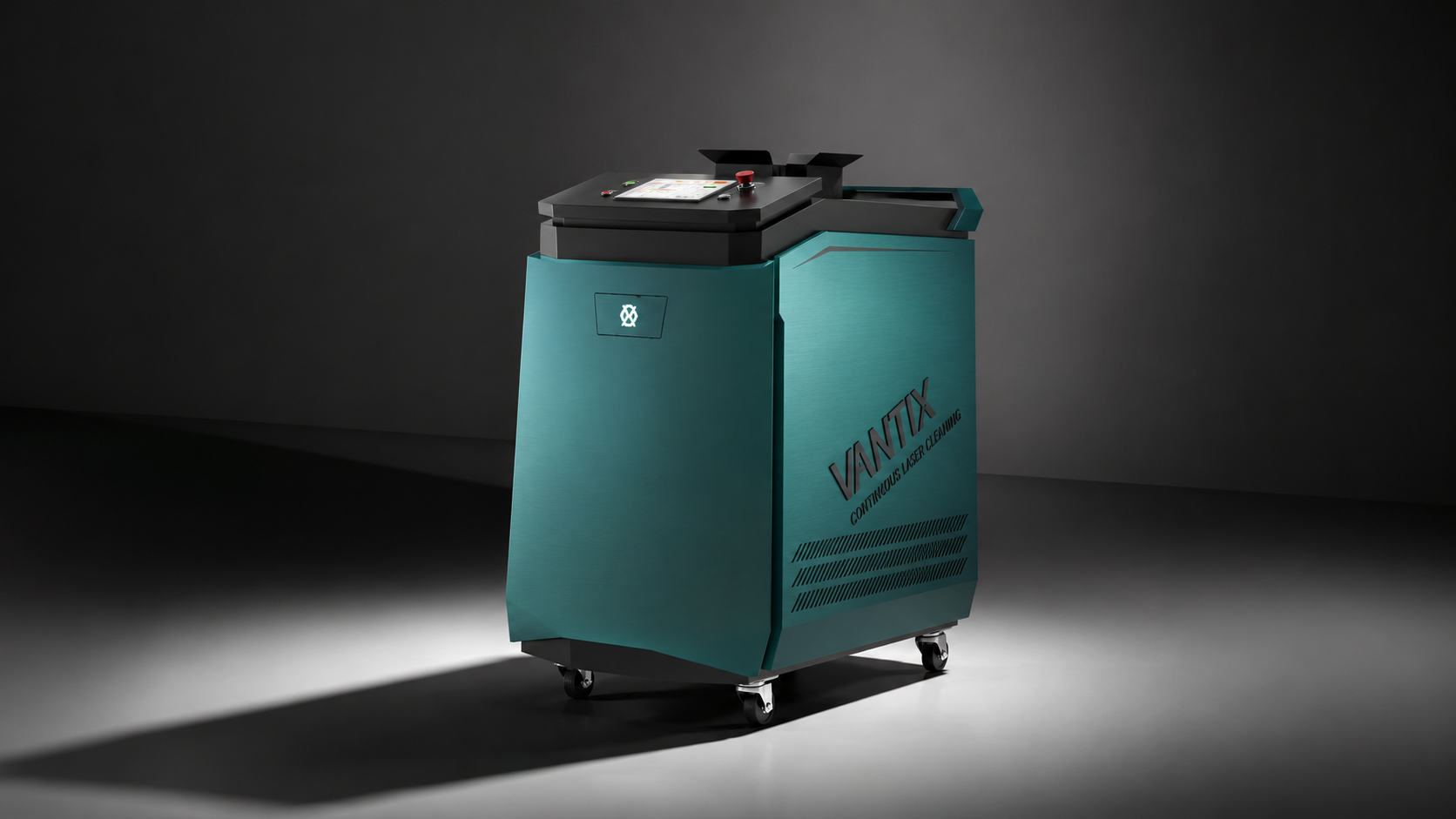
Continuous Laser Cleaning Machines (2 kW / 3 kW)

Built for high-throughput industrial rust, paint, and coating removal: up to 3000 W continuous output with full parameter control.
Match Airflow to the Cleaning Job
Every cleaning job has a different contamination profile, and the airflow needs to match. Switching is instant: a rotary selector on the head, no tools, no reconfiguration. One head handles everything from light oxide to heavy coating without swapping hardware, optics stay cleaner longer, and difficult substrates process faster.
Mode
How It Works
Best For
Coaxial
Airflow aligned with the laser beam
Direct optic protection, general cleaning
Side-Axis
Airflow intersects the beam at an angle
Uneven or heavily oxidized surfaces
Simultaneous
Coaxial + side-axis combined
Heavy rust, thick coatings, industrial removal

Pulsed Cleaning Engineering

Dual Red-Light Positioning & Scan Preview
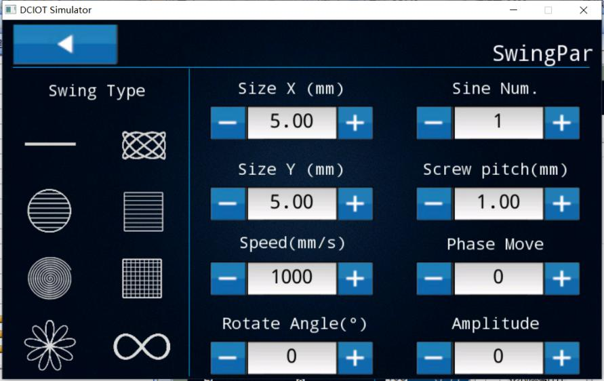
Before the laser fires, a dual red-light module projects the scan pattern on the surface: straight line for efficient thick-rust removal, grid fill for uniform mold cleaning, wave for thin layers and heat-sensitive surfaces, spiral, petal and figure-eight for localized spots, circular fill for round components.
Adjustable scan frequency and width balance cleaning speed against surface protection.

Eight Selectable Cleaning Modes
Pattern selection matched to contamination type: line, square, circle, wave and more, eight in total.
Automation-Ready Platform
The pulsed system is handheld today, robot-ready tomorrow: multiple I/O interfaces, EtherCAT / Profinet compatibility (configuration-dependent), QBH fiber interface compatibility, and remote parameter access. Start manual, scale to robotic or gantry integration without replacing the laser source.
Enhanced Safety Design
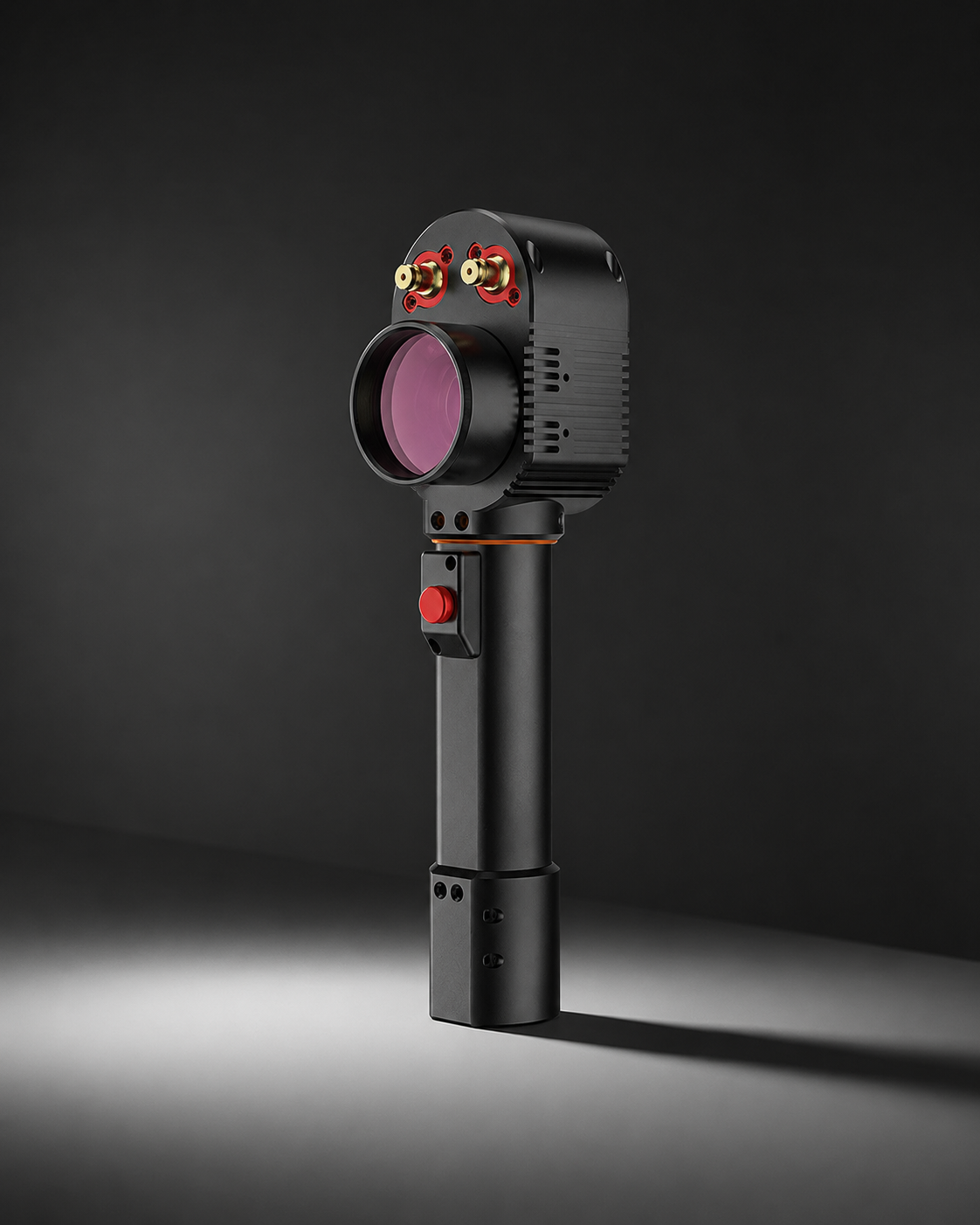
The handheld cleaning gun includes a safety lock mechanism requiring deliberate activation before laser emission, with integrated temperature monitoring and alarms, preventing accidental triggering during handling.

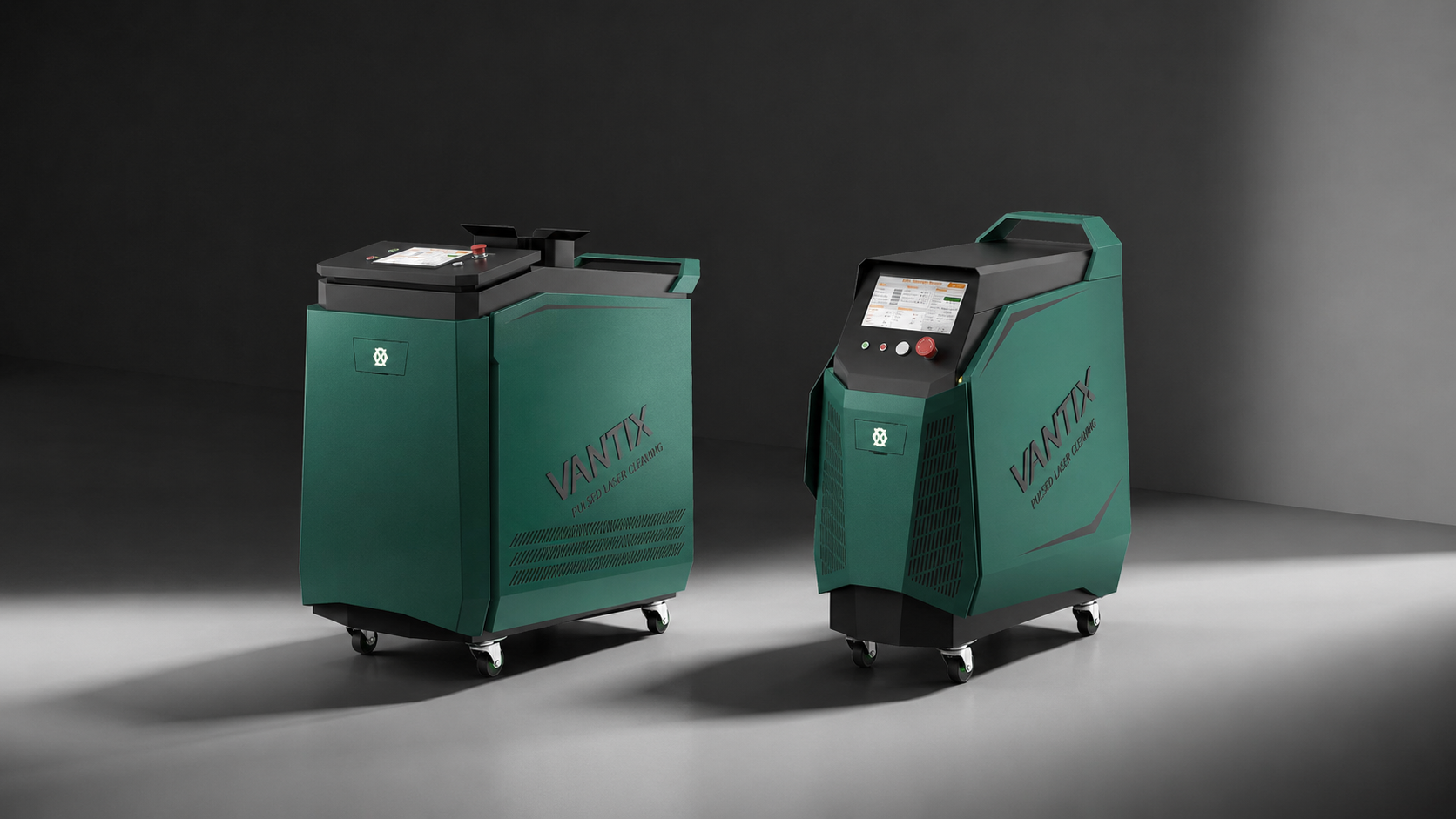
Pulsed Laser Cleaning Platform (200 W to 2000 W)

Built for precision work: heritage restoration, heat-sensitive substrates, mold cleaning, and detail work where controlled material removal is non-negotiable.
Choose Air-Cooled or Water-Cooled Pulsed Cleaning

Both share the same precision pulsed cleaning principle and control architecture: pick cooling based on workflow, not capability.

The same pulsed platform, in two cooling architectures:
Feature
Air-Cooled (200 W / 300 W)
Water-Cooled (500 W / 1000 W / 2000 W)
Chiller
None: integrated air
External closed-loop chiller
Portability
Lighter handheld head, field-ready
Designed for fixed-station operation
Best For
Maintenance, repair, moderate-duty cleaning, outdoor work
Extended sessions, batch processing, large-area removal
Setup
Plug in and clean
Closed-loop cooling, higher thermal stability

What This Means for Your Shop

Whether you're stripping paint from a locomotive, prepping weld seams, or cleaning production molds: you're picking the cooling, the mode, and the power level that matches the job. Not a compromise.

Bring a contaminated sample. We'll clean it in the Lumby showroom, continuous for the broad work, pulsed for the delicate work.

What a Laser Rust Removal Machine Costs

Vantix does not publish a list price for laser cleaning. The reason is not evasion, it is that the machine you need is set by the work: a 200 W air-cooled pulsed head for restoration detail and a 2000 W water-cooled system for batch paint stripping are different machines with different installation, cooling and training requirements.

What we can tell you before you call:
  • The published range is wide, and the cheap end is real. Handheld rust-removal units sell online in Canada from roughly the price of a good welder up to the price of a small CNC. Those units exist and some of them work.
  • The purchase price is the smaller number. Consumables, optics service intervals, cooling, operator training and downtime dominate the cost per hour. Lens and protective glass are the most commonly replaced parts on any cleaning system, which is why the air knife design matters more than the sticker.
  • Financing is available. See Financing.
  • Comparable Vantix pricing is public. Our handheld welding platform is published at $32,000, $42,000 and $52,000 CAD by power step, so you can calibrate what an industrial Canadian-supported machine costs before you talk to us.
  • An industrial system and an imported handheld are different purchases. See how an industrial system compares with the imported handheld units.
For a figure against your actual parts, book a demo and bring a contaminated sample.

The Limits of Laser Rust Removal

Laser cleaning is not the right answer for every job. Where it is not, we will tell you.
  • It is line-of-sight. The beam cleans what it can see. Deep internal bores, blind cavities and tightly boxed sections are hard or impossible to reach, and complex geometry costs you time in fixturing and passes.
  • Heavy coatings are slow. Light oxide and flash rust go quickly. Thick, multi-layer paint on a large area can take longer than blasting, and on very large open surfaces abrasive blasting is still often the faster tool.
  • Purchase cost is high relative to abrasive kit. The economics come from consumables, waste disposal and labour over time, not from day one. If you clean occasionally, the payback is long.
  • It requires a controlled working area. A controlled area, trained operators and eye protection are required. This is a real change to how a shop works, not a plug-in tool.
  • Fume and residue still have to be captured. Laser cleaning removes the media and the chemicals, not the requirement to manage what comes off the surface. Where the coating contains lead or other hazardous material, extraction and filtration are mandatory.
  • Some substrates need care. Reflective metals and thin or heat-sensitive sections need the right power step and pattern. This is why we run your sample before you buy rather than after.
If your job is mostly deep internal surfaces, or a one-off large-area strip, we will say so. Talk to us and we will tell you whether this is your tool.

Included with Every System

2-Year Extended Warranty
5-Day On-Site Training
1-Year Spare Parts Kit
24/7 Support
Installation + Commissioning
Spares stocked in BC. 24/7 Canadian hotline. 48-hour on-site response across Western Canada.
IN ACTION

See Laser Cleaning in Action

Watch rust disappear before your eyes. Our BC showroom demonstrates laser cleaning capabilities on various materials and contamination types.
Schedule Your Demo

Ready to Eliminate Chemicals and Abrasives?

See how laser cleaning can simplify your surface preparation while protecting your team and the environment.