Laser Systems for Mining and Heavy Equipment Shops

Buckets, wear plates and equipment refurbishment are named applications on our own spec sheets. Read the service coverage section before you assume that means everywhere in Canada, because it does not.
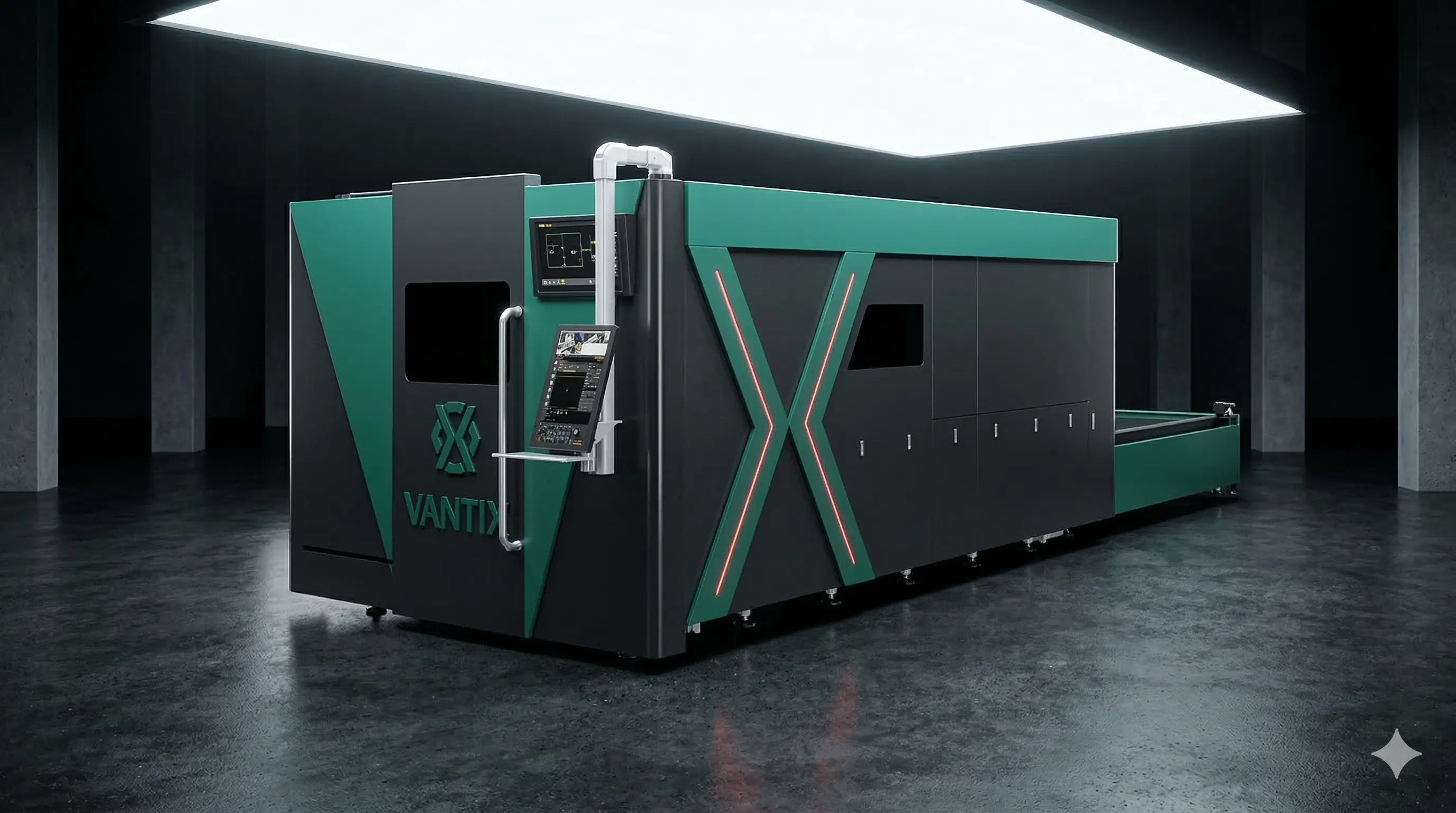
Laser cutting thick steel wear plate for mining equipment
Who This Page Is For
Mine maintenance shops, heavy equipment rebuilders and the fabricators who supply them. Wear plate, buckets, liners, structural repair and refurbishment.
Mining Is Named on Our Spec Sheets
This is not language written for a web page. The structural profile sheet lists buckets and wear plates. The welding sheet lists wear-part repair and refurbishment. The cleaning sheet lists mining and MRO.
National in Interest, Not in Commitment
Canadian mining runs coast to coast. Our published on-site commitment does not. It is 48 hours in Western Canada, and there is no published on-site commitment east of Alberta. Phone and remote support have no regional limit.
See our Canadian service coverage
Summary

Key Takeaways

Vantix's own spec sheets name mining applications: buckets and wear plates on the structural profile sheet, wear-part repair and refurbishment on the welding sheet, mining and MRO on the cleaning sheet.
Published cutting capability: 3 to 60 kW fiber laser, steel to 5 in (127 mm) at 60 kW, ±0.03 mm repeatability, beds configurable to 12 ft by 60 ft. Thickness figures are published for 60 kW only.
Mining wear parts are AR400/AR500 abrasion-resistant plate: chute liners, screen decks, truck box and bucket liners, cut to the same pattern again and again.
Mining-region welders cost more than provincial medians: BC Kootenay median $40.68/hr against BC's $35.00 and Ontario's $28.00. Vantix publishes handheld laser welding at 4× MIG/TIG speed, trained in days, from $32,000 CAD.
The service commitment is honest: 48-hour on-site applies to Western Canada. There is no published on-site commitment east of Alberta. The 24/7 engineer-answered line, 778-907-9796, and same-day remote diagnostics carry no regional limit.
What Mining Maintenance Demands
Watch the Vantix process
Wear Plate and Ground-Engaging Parts
Liners, lips and wear packages are thick, abrasion-resistant steel, cut to the same pattern again and again.

What the specs say: fiber laser cutting from 3 kW to 60 kW cuts steel to 5 in (127 mm) at 60 kW, with ±0.03 mm repeatability, 450 ft/min positioning speed and beds configurable up to 12 ft by 60 ft.
Bucket and Structural Repair
Bucket rebuilds and frame repair need profile and plate handled together, with the weld prep already done.

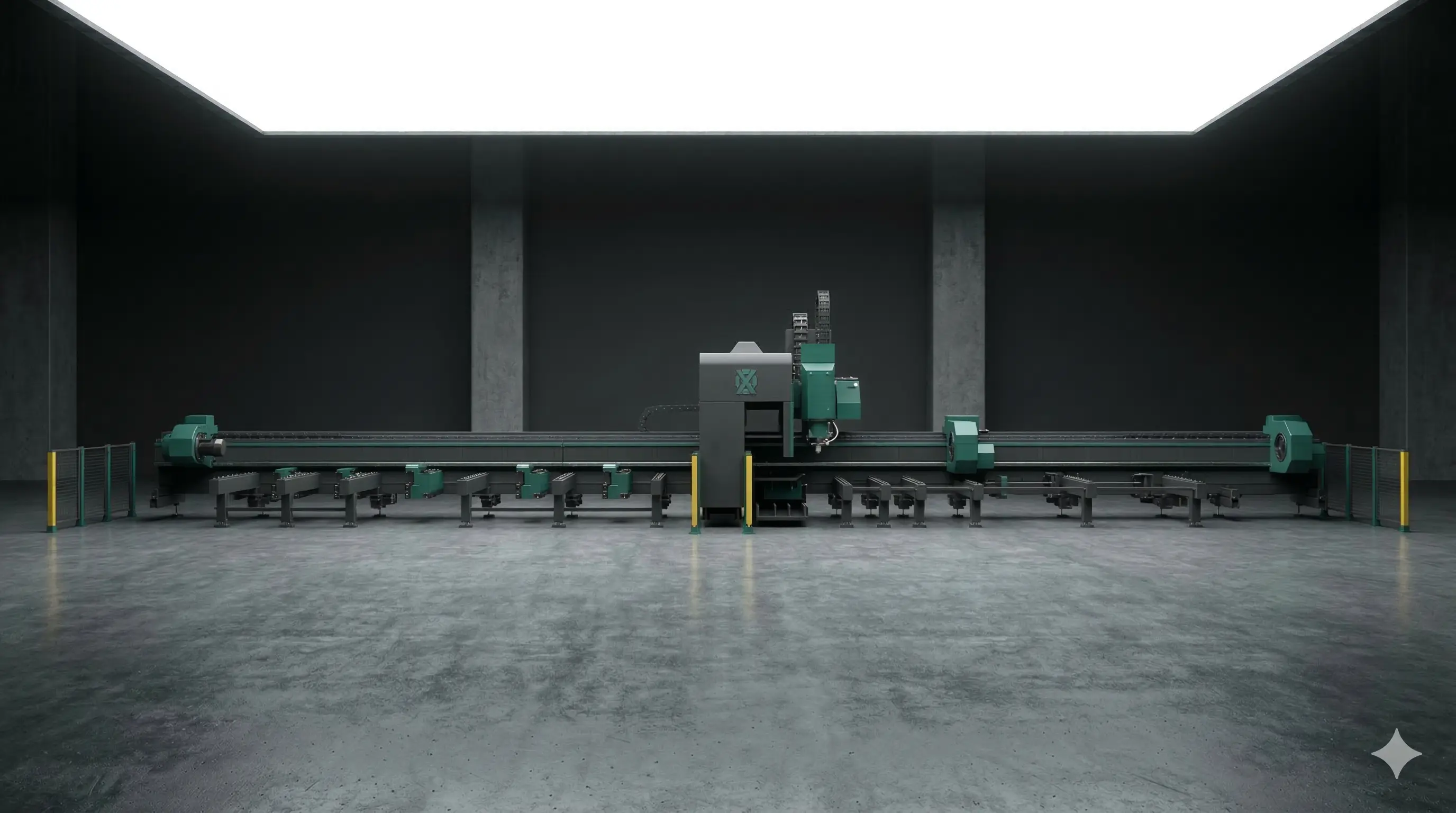
What the specs say: the HPM structural profile system runs a profile station and a plate station with a ±45° bevel head, cutting straight, V and Y joints. Its own spec sheet lists buckets and wear plates as applications.
See our structural steel fabrication equipment
Refurbishment Without Grit or Chemicals
Blasting a component to prep it creates media, containment and disposal that a remote site has to manage itself.

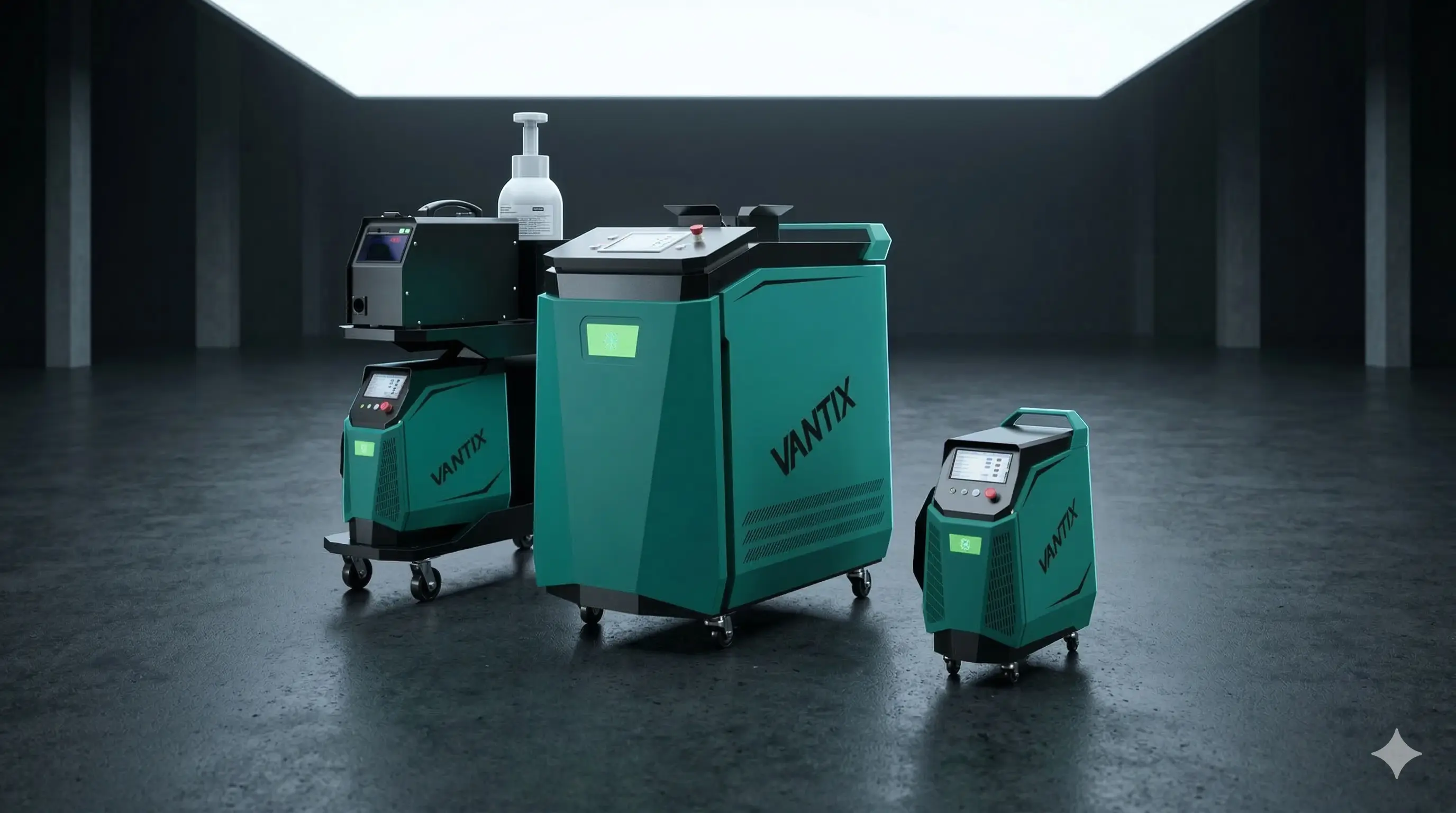
What the specs say: laser cleaning reaches SP-10 near-white surface prep. Continuous 2 and 3 kW systems carry a max scan width up to 300 mm; pulsed options run 200 W, 300 W, 500 W, 1000 W and 2000 W. The cleaning sheet lists mining and MRO as an application.
Where We Actually Show Up
Service radius decides whether a capital purchase is an asset or a liability, and mine sites are rarely near anyone.

What the specs say: 48-hour on-site in Western Canada, with parts in 1 to 3 days. Beyond that region Vantix publishes extended service coverage across North America with no stated response time. Phone support is immediate and remote diagnostics are same day, everywhere.
Parts & Materials

What Mining Wear Parts Are Actually Made Of

This table is the industry side of the conversation, with sources shown. It describes what mine maintenance consumes; whether a given machine cuts it is a separate question answered lower down from Vantix's own published specs, and nowhere else.
Chute liners (transfer chutes, conveyors)
AR400 / AR500 abrasion-resistant plate, spec'd against impact and sliding abrasion. Distributor AR400 stock runs from roughly 1/8 in cut-to-length up to 2 in standard plate (Clifton Steel; Steel Warehouse).
Flat plate cutting, forming, bolt-hole patterns
Screen decks / punch plate
AR400/AR500, Hardox, high-carbon or stainless, apertures punched or laser-cut, customizable up to one inch (AP Screens).
Precision round, square and slotted hole patterns in AR plate: a natural laser-cut part
Wear packages: truck box liners, bucket liners, hoppers, bins
AR400 recommended for dump truck liners, chutes, bins, buckets and hoppers; AR500 for lower-impact, higher-wear surfaces (Steel Warehouse; MWalloys).
Numbered liner kit cutting, edge prep, plug-weld hole patterns
Bucket rebuilds: base edges, side cutters, wear strips, liner plates
AR400/450/500; chromium carbide overlay plate on the highest-wear zones, overlay hardness HRC 58 to 64 (SSAB overlay products).
Cutting liner blanks, gouging out old plate, welding new plate; handheld welding suits on-frame repair
Grizzly bars, apron feeder pans, skirtboard liners, impact plates
AR plate and CCO plate at the thick end of stock (SSAB overlay products).
Thick-plate cutting; CCO overlay itself is commonly plasma-cut, and this page does not claim otherwise
Structural steel: conveyor gantries, screen towers, transfer towers, headframes, platforms
W-shapes, HSS, plate gussets, grating frames (CWB Group).
H-beam and profile cutting; welded to CSA W59 by CWB-certified fabricators, an obligation covered in the compliance section below
Two honest exclusions. Mill liners and crusher liners are typically manganese-steel castings; replacing them is a change-out job, not a fabrication job, and no cutting machine changes that. And hardness numbers are reference points, not cutting claims: AR400 runs roughly 360 to 444 BHN and AR500 roughly 470 to 540 BHN. Vantix's published cutting table speaks to steel thickness at given power, not to AR grade; the right way to settle it is to bring your liner drawings and your plate to a demo.

Plasma, Blasting and Downtime: the Numbers Already in Your Budget

Start with the honest concession, from the plasma OEM itself: Hypertherm publishes that a plasma system's initial investment is typically 2 to 5 times less than a fiber laser cutting system, and that plasma is especially advantageous when cutting metal greater than 16 mm, which is 5/8 in. Mining wear parts cluster in 3/8 in to 2 in plate, exactly where plasma is entrenched. Any laser page that skips this is selling, not consulting.
The laser case in this vertical rests on four things plasma cannot give: hole quality on screen decks and bolt patterns, kerf and nesting yield on liner kits, edges without dross to grind, and a consumables line without electrodes and nozzles. Xometry's published operating averages put the two processes closer than most buyers expect, around $20 per hour for laser against around $15 for plasma, while the precision gap is wide: plasma kerf above 3.8 mm with 0.5 to 1 mm precision, laser kerf around ±0.15 mm.
Plasma consumables are a real line item, but the widely quoted per-shift dollar figures could not be verified to a primary source, so this page publishes the formula instead: consumable cost per hour equals wear-set price divided by arc-on life. One verified Canadian anchor: a genuine Hypertherm electrode 5-pack sells for $89.99 CAD, about $18 per electrode, and an electrode is half the wear set.
Plasma capital cost
2 to 5× less than fiber laser
Hypertherm's own published framing; the concession runs both ways
Operating cost averages
~$20/hr laser · ~$15/hr plasma
Xometry published averages, retrieved 2026-08-14
Precision
Laser kerf ±0.15 mm vs plasma >3.8 mm
The gap that decides screen decks and bolt patterns
Blasting vs laser cleaning
Blasting covers large areas faster; laser cleaning uses no consumable media
KEYENCE's published comparison concedes both directions; laser's case is spot work: weld-zone prep, cleaning before inspection, no grit disposal
US blasting contractor benchmark
$2 to $5 per sq ft typical, to $16 heavy profile
US contractor data in USD, flagged as such; no Canadian public equivalent found (Fixr)
The number that actually governs
Haul truck unplanned downtime
$5,000 to $10,000 per hour, published industry estimates
MapTrack equipment-downtime statistics page, attributing McKinsey mining operations research (2024); the attribution chain was not independently verified, so treat as a published estimate, not a McKinsey citation
What wear parts really are
Consumables with known change-out intervals
The economic question is stockout risk against downtime, not cut cost per part
The in-house fabrication case
Liner kits and rebuild plate on your schedule
The alternative is an outside shop's queue between you and a parked truck
Labour

What a Welder Costs Where the Mines Are

All wage rows are Government of Canada Job Bank data, occupation report 23242 (welders) and 14719 (industrial mechanics and millwrights), wages updated 2025-11-19, retrieved 2026-08-14. Hourly CAD, median unless noted.
British Columbia, welders
$35.00
High $51.87
BC Kootenay Region, welders
$40.68
Elk Valley coal country; high $58.97, the steepest welder market in the table
BC Cariboo Region, welders
$39.95
High $54.40
Ontario Northeast (Sudbury/Timmins), welders
$32.00
Against Ontario's provincial $28.00
QC Abitibi-Témiscamingue, welders
$32.00
Against Quebec's provincial $28.00
BC Kootenay Region, millwrights
$45.00
High end reaches $80.00/hr
The pattern is one-directional: mining regions pay a premium over their own provincial medians, because the mines and their contractors bid against every fab shop in town for the same tickets. Getting one of those tickets is a roughly three-year Red Seal apprenticeship: 6,000 hours in Ontario, Level 3 technical training plus 4,500 work-based hours in BC. CWB welder qualification testing at accredited centres runs roughly $165 to $185 per test plate and position, fees set per centre, and a CWB shop certification to CSA W47.1 carries a base fee of $1,740 per year.
Vantix's own published answer to that market is the hiring math printed on its welding sheet: qualified TIG welders cost $75 to $110K a year plus benefits plus months of training; the handheld laser welder runs 4× faster than MIG/TIG with operators trained in days, and the platform starts at $32,000 CAD, with the 2 kW air-cooled at $42,000 and the 3 kW at $52,000. Weld penetration is published at 6, 8 and 10 mm for 1.5, 2 and 3 kW.
See our handheld laser welding machines

Equipment for Mining and Heavy Equipment

Published Numbers, Not Adjectives

5 in
maximum steel thickness at 60 kW (127 mm)
SP-10
near-white surface prep, laser cleaning
10 mm
maximum weld thickness at 3 kW
48 hrs
on-site response, Western Canada only
Compliance

Who Actually Holds Each Certificate

Mixing up what certifies a shop, a welder, a machine and a mine site is the fastest way to lose a technical reader, so here is the map, stated as your obligations, not our credentials. No cutting or welding machine is the certified object in any of it.
CSA W47.1
Your company
Certification of companies for fusion welding of steel, administered by the CWB Group. Structural steel work under CSA S16 and CSA W59 requires fabrication by W47.1-certified companies. Base fee $1,740/yr.
CSA W59
The weldment
The workmanship and design code the fabrication is done to; W47.1 is the certification the shop holds.
CWB welder ticket · Red Seal
The individual welder
Qualified per process and position at accredited test centres; maintained through a certified employer. Red Seal is the interprovincial trade endorsement.
CSA W117.2
Your workplace
Safety in welding, cutting and allied processes; in BC it is adopted by reference in the OHS Regulation, enacted via B.C. Reg. 312/2003.
Class 4 laser obligations
Your workplace
Industrial fiber lasers are Class 4 devices; WorkSafeBC OHS Regulation Part 7 s.7.19(4) applies laser exposure limits per the ANSI Z136 series. Enclosures, eyewear and the laser safety program sit with the employer. WorkSafeBC regulates employers, not products; no machine is 'WorkSafeBC certified'.
Mine-site codes
The mine operator
In BC, the Health, Safety and Reclamation Code for Mines (most recent update June 2026); in Ontario, Reg. 854 under the OHSA governs mines and mining plants. These govern on-site work, not your off-site fabrication shop.
Where Vantix fits in that map: the machine's job is repeatable, traceable output inside your certified program, and the compliance documentation package for any model is provided with the quotation. Get it named on the quote, model by model.
Heavy equipment bucket rebuild in a mine maintenance shop

What a Mining Buyer Should Confirm

Mine sites carry their own approvals, and no laser vendor can hand you any of them. These are the questions worth putting to any supplier, including us.
  • Welding certification belongs to your shop. CWB certification to W47.1 governs your procedures and your welders, and introducing a laser process is a discussion to open with the Bureau before the equipment lands.
  • Provincial regulators differ. CRNs attach to boiler, pressure vessel and fitting designs, registered where the equipment operates, through ABSA in Alberta or Technical Safety BC in British Columbia; in Alberta, pressure piping packages are registered with PP numbers instead. Site electrical and laser safety approval sits with the operator under provincial occupational health and safety rules.
  • Pin the service commitment to a map. Ours is 48 hours on-site in Western Canada. Ask any vendor for a response time and the region it applies to, in one sentence.
Learn About Financing
Geography

The Camps, the Numbers and the Honest Map

The industry this page addresses is not an abstraction. The Mining Association of Canada's Facts & Figures 2026 puts mining at $111 billion of GDP in 2024, 438,000 direct jobs, and $152 billion in exports, 21% of all Canadian merchandise exports.
Inside the committed 48-hour Western Canada service area: Highland Valley Copper, Canada's largest open-pit copper mine, about 50 km southwest of Kamloops, processing roughly 155,000 tonnes a day with a $2.1 to 2.4 billion mine-life extension announced in 2025; and the Elk Valley's four steelmaking coal mines around Sparwood and Elkford, roughly 5,500 jobs under Elk Valley Resources. Kamloops-area fabrication and supply serves Highland Valley and regional operations, and Kamloops is also where the one named Vantix customer in print did its work: the Kamloops Heritage Railway Society's Spirit of Kamloops restoration, a heavy-steel cleaning job finished in three hours that had been scoped in weeks.
Read the Spirit of Kamloops restoration case study
See the 48-hour Western Canada service area
British Columbia service coverage
East of Alberta, the honesty published at the top of this page holds. The Sudbury Basin runs nine operating mines, two mills, two smelters and a nickel refinery, with 300+ mining supply and service firms and 14,000 people employed in supply and services, on Invest Sudbury's own figures; the Abitibi belt around Val-d'Or, Rouyn-Noranda and Malartic carries Canadian Malartic, the country's largest open-pit gold mine. Vantix publishes no on-site commitment for any of it. Phone support and same-day remote diagnostics have no regional limit, and parts ship from Lumby, BC as domestic freight anywhere in Canada, but a shop in Sudbury should price this equipment knowing the service map, not hoping about it.
The bodies worth knowing by name, because your buyers and inspectors do: CIM, the Canadian Institute of Mining, Metallurgy and Petroleum, founded 1898, roughly 10,000 members; the Mining Association of British Columbia; MineConnect and NORCAT in northern Ontario; 48e Nord International in Abitibi-Témiscamingue. Vantix publishes an attendee guide for where this industry gathers; see the CIM CONNECT guide.
Open the CIM CONNECT guide
FAQ

Common Questions

Can a fiber laser cut AR400 and AR500 wear plate?
AR400 and AR500 are abrasion-resistant steels, and Vantix publishes steel cutting to 5 in (127 mm) at 60 kW, with supported materials listed as steel, stainless, aluminum, copper, brass and titanium. Published thickness figures are for 60 kW and are not grade-specific, so the honest answer is the demo: bring your liner drawings and your plate, and cut them before you sign anything.
Does Vantix service mine sites in Ontario or Quebec?
There is no published on-site commitment east of Alberta, and this page says so rather than implying otherwise. The 48-hour on-site commitment applies to Western Canada. Phone support on 778-907-9796 is 24/7 with no regional limit, remote diagnostics are same-day everywhere, and parts ship from Lumby, BC as domestic freight.
What replaces sandblasting for mining equipment refurbishment?
For large-area stripping, often nothing: KEYENCE's published comparison concedes blasting covers big areas faster. Laser cleaning's case is the spot work around it: weld-zone prep on rebuilds, cleaning before inspection, and surface prep to SP-10 near-white without media embedment, containment tenting or a grit disposal stream. Vantix publishes continuous 2 and 3 kW and pulsed 200 W to 2000 W options.
Does a laser cutting machine need mining certification?
No. Certification attaches to shops, welders and sites, never to the cutting machine: your shop holds CSA W47.1 through the CWB for structural work, your welders hold CWB tickets, and mine sites answer to provincial codes such as BC's Health, Safety and Reclamation Code for Mines. Class 4 laser safety obligations sit with the operating employer under provincial OHS rules.
Which Vantix machine fits a wear-parts program?
By published application: FLC fiber laser cutting for liner and deck plate to 5 in steel at 60 kW; the HPM structural profile system, whose own sheet names buckets and wear plates, for profile plus plate with ±45° bevel weld prep; handheld laser welding, whose sheet names wear-part repair and refurbishment, to 10 mm at 3 kW; and laser cleaning, whose sheet names mining and MRO, for prep and refurbishment to SP-10.

See It Cut Your Wear Plate

Bring a drawing and a sample of the plate you actually run. The Lumby showroom cuts it before you sign anything. Call 778-907-9796 or book a time.