Laser Systems for Food Equipment Manufacturers

Sanitary stainless fabrication is won on edge quality and weld finish, not on rework. Stainless cuts to 3.5 in (89 mm) at 60 kW, and handheld laser welding produces clean welds that skip post-weld finishing. This page shows the parts, the incumbent-process costs and the labour math behind that claim, and scopes the sanitary standards the way an inspector would, not the way a brochure does.
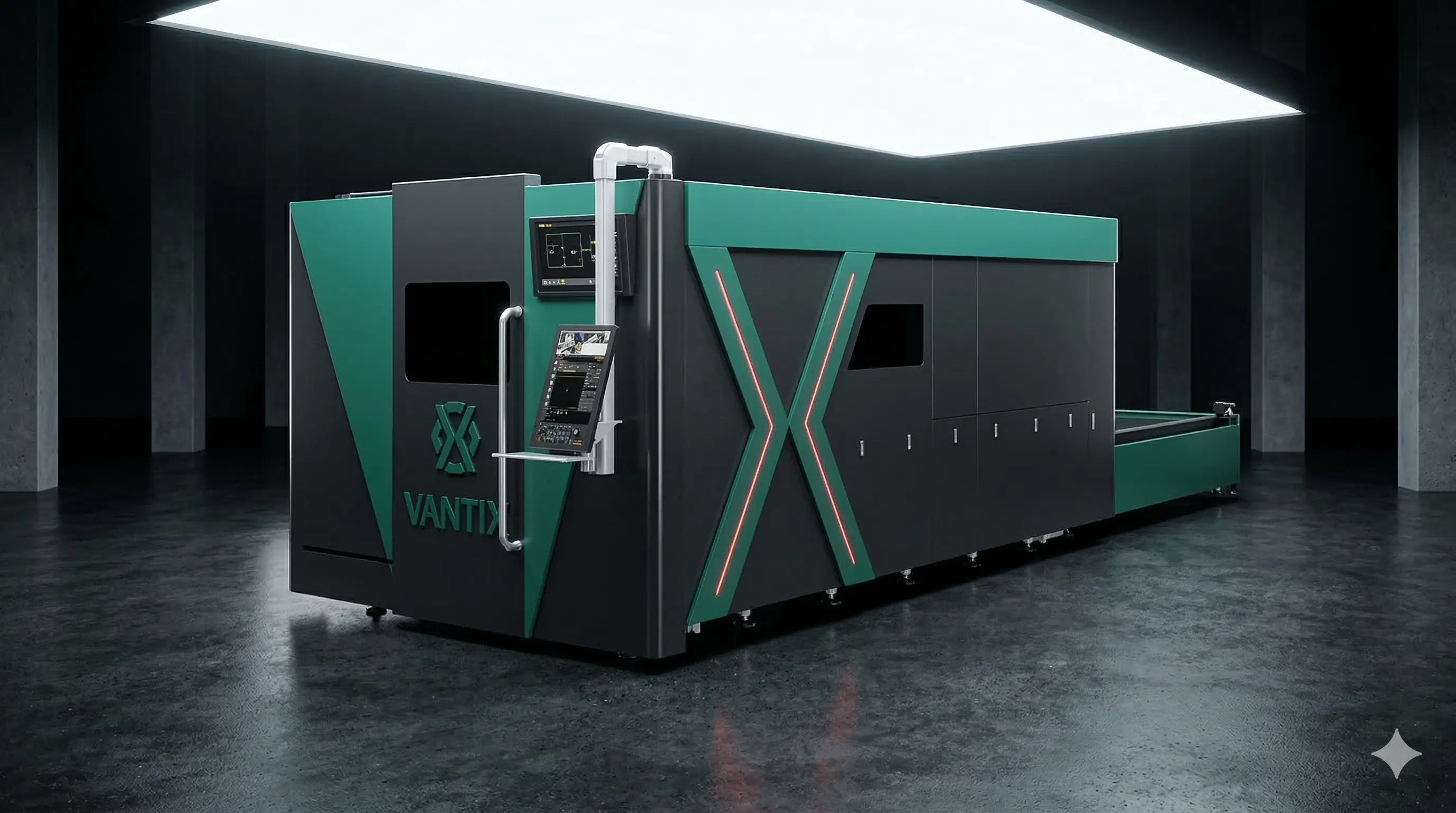
Sanitary stainless steel sheet being fiber laser cut for food processing equipment
Who This Page Is For
Manufacturers of commercial kitchen equipment, processing lines, tanks, conveyors and enclosures, plus the shops that fabricate and repair them.
Stainless Is the Whole Job
Sanitary work lives or dies on surface finish and weld quality. Every extra grinding and polishing pass is cost you never recover, and thin stainless is where heat input turns into warp.
Named in Our Own Material
Food equipment is listed as an application on both the fiber cutting spec sheet and the handheld welding spec sheet. This is a sector Vantix already names, not one invented for a web page.
See our Canadian service coverage
Summary

Key Takeaways

Food equipment fabrication is 304L and 316L stainless, mostly 1 to 4 mm sheet: conveyor aprons, hoppers, perforated screens, guards and frames, plus sanitary tube in 316L. The legal driver is SFCR s.53: food-contact surfaces must be smooth and free of pitting, cracks and flakes.
Sources: Baud Laser food-sector page; Safe Food for Canadians Regulations, SOR/2018-108, s.53.
Vantix publishes the matching specs: stainless to 3.5 in at 60 kW with ±0.03 mm repeatability, handheld laser welding with minimal heat input and clean welds that skip post-weld finishing, and a 4-in-1 head that includes a seam-clean mode.
Source: Vantix published spec sheets, fiber cutting and handheld welding.
The incumbent joining process is TIG: roughly 1 to 3 lb/hr deposition and 4 to 6 inches per minute of manual travel, then finish work after every weld. IPG, the category benchmark, publishes that handheld laser welding is 4x faster than TIG and needs novice-level training.
Sources: Haynes International GTAW welding guide; IPG LightWELD published claims.
Weld-seam cleanup by pickling paste is hydrofluoric plus nitric acid with WHMIS handling and disposal burden; published comparisons put a 6-inch weld at 20 to 30 minutes chemically versus under a minute electrochemically. Laser weld prep competes for exactly that slot.
Sources: International Air Tool / Walter SURFOX weld-cleaning article; TIG Brush.
CFIA does not approve or certify equipment, and neither does a HACCP plan. SFCR obligations sit on the food business; 3-A and NSF standards govern equipment design and materials. A machine vendor can support that paperwork, never carry it for you.
Scoping: SFCR, CFIA enforcement, 3-A Sanitary Standards, NSF/ANSI equipment standards.
Parts & Materials

What Food Equipment Shops Actually Cut and Weld

The parts list below comes from food-sector fabricators' own published pages, not from a laser brochure. 304L and 316L are the two reference grades for food contact and humid or corrosive environments; 316L is preferred where salt, acid and aggressive cleaning chemicals are present.
Conveyor aprons and casings
304L / 316L stainless
Thin sheet 1 to 4 mm is the fabricator's stated bread-and-butter range; capability to 20 mm
Laser cut, formed, welded; burr-free edges cited as a hygiene feature (Baud Laser)
Feed hoppers
304L / 316L
1 to 4 mm typical
Cut and welded; interior welds must be cleanable (Baud Laser)
Filtration and sorting grilles, perforated screens
304L / 316L
Thin gauge, complex geometry "unsuitable for punching"
Fiber laser cutting; Baud Laser runs a 4 kW fiber laser on a 3000 × 1500 mm bed for this work
Equipment supports, mounting plates, machine panels
304L / 316L; mild steel where non-contact
Plate capability to 20 mm stated
Laser cut (Baud Laser)
Sanitary process tubing for dairy, beverage and CIP lines
316L to ASTM A270-S2
Standard OD 1 in to 3 in; 16 ga (0.065 in) wall; polish spec 20 Ra max ID / 32 Ra OD
Orbital or manual TIG today; tube straightness and roundness specs exist specifically to support orbital welding (Austenitex and corroborating A270-S2 product listings)
Tanks, vessels, heat exchangers, piping, pumps and valves
Stainless sanitary grades
Per design
Named product categories of Ontario sanitary equipment suppliers such as Stainless Process Equipment Inc., Mississauga, est. 1994
The legal driver behind every row: the Safe Food for Canadians Regulations require food-contact surfaces to be 'smooth, free from pitting, cracks and flakes and non-absorbent', which is why burr-free cut edges and ground, crevice-free welds are specified, and why every extra grinding pass exists in the first place.
What Sanitary Fabrication Demands
Watch the Vantix process
Stainless Thickness and Edge Quality
Stainless sheet and plate has to come off the machine with an edge that does not need dressing before it is welded.

What the specs say: stainless to 3.5 in (89 mm) at 60 kW across a 3 kW to 60 kW range, with ±0.03 mm repeatability. Steel, aluminum, copper, brass and titanium are supported on the same platform.
Welds That Skip Post-Weld Finishing
Grinding and polishing a sanitary weld is slow work, and it is exactly where thin stainless distorts.

What the specs say: minimal heat input means near-zero warp on thin sheet and clean welds that skip post-weld finishing. Stainless, carbon steel, galvanized and aluminum are supported, with copper and brass at 3 kW.
The Welder You Cannot Hire
Qualified TIG welders cost $75,000 to $110,000 a year plus benefits, and take months of training before they are productive.

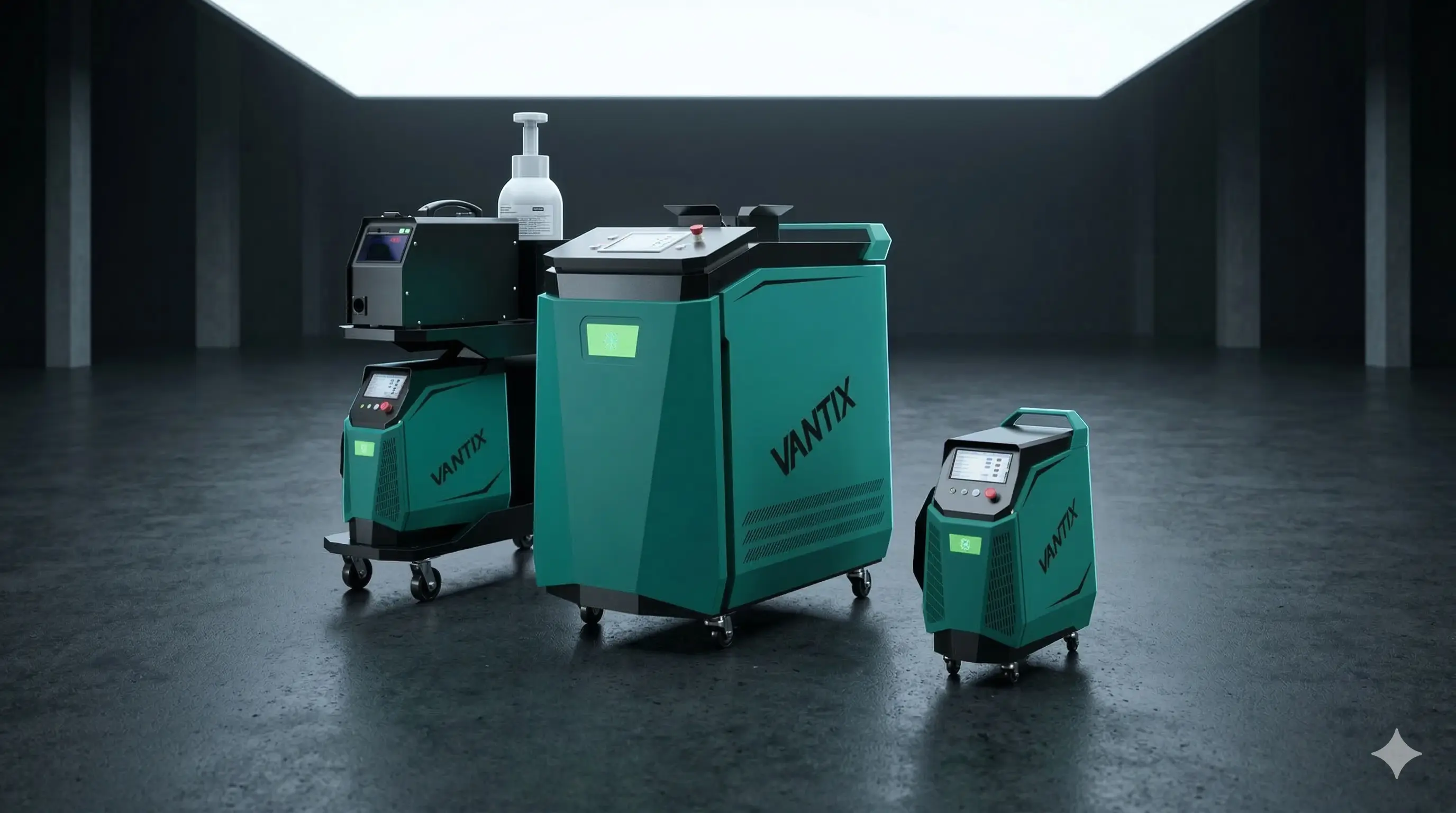
What the specs say: laser welding is 4x faster than MIG and TIG and is trained in days. Published pricing runs from $32,000 CAD for the 1.5 kW handheld, $42,000 for 2 kW air-cooled and $52,000 for the 3 kW platform.
Tube, Frame and Enclosure Work
Legs, frames, guarding and conveyor structure are tube and profile work that most equipment shops still send out.

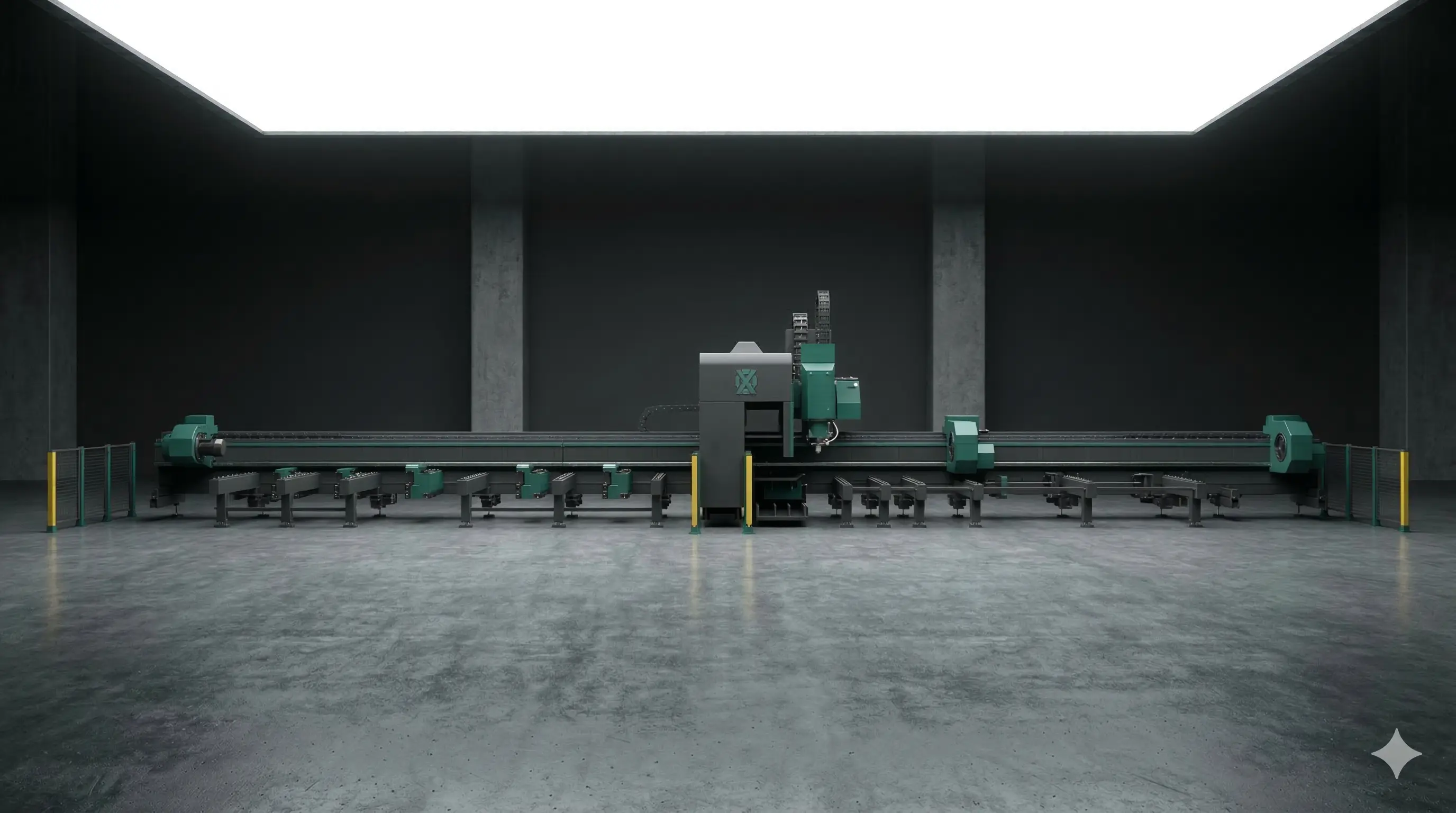
What the specs say: tube and profile cutting handles round, square and rectangular tube plus H-beam, I-beam, C-channel, angle and Z profiles, to 48 ft length at ±0.05 mm. Outsourcing that work costs 15% to 25% in markup.

What TIG and Its Finish Work Actually Cost

TIG is the incumbent joining process for sanitary stainless because it is clean, and it is also one of the slowest common processes. An alloy producer's own welding guide puts suggested manual GTAW travel at 4 to 6 inches per minute and states plainly that deposition rates during manual welding are low; trade references put TIG-class deposition around 1 to 3 lb/hr. The Sheet Metal and Air Conditioning Contractors' association's 2024 comparison states laser welding exceeds TIG speed 'by 4X or more,' and IPG (the handheld category benchmark, whose claims are attributed here as its own marketing) publishes '4x Faster than TIG' and that novice operators require less training.
Sanitary welds then carry a second, quieter invoice: the finish work. 3-A-type requirements mean full-penetration welds free of porosity, undercut and crevices, blended back to the base-metal finish: grinding and polishing labour after every weld, on exactly the thin sheet where heat and pressure turn into distortion. No published per-weld polishing time exists; the one quantified finishing-step number in the literature is chemical: pickling a 6-inch weld takes 20 to 30 minutes, versus 30 to 60 seconds for electrochemical cleaning of the same weld.
The chemical route also carries handling most shops would rather retire: traditional pickling paste is hydrofluoric plus nitric acid, WHMIS-controlled from cupboard to disposal, and after pickling a separate passivation step is still required. ASTM A967 governs chemical passivation; citric-acid routes are published as costing 60 to 80% less in disposal than nitric. Two scoping facts keep this honest: passivation does not replace weld-scale removal, and heat tint and embedded iron must be dealt with first; that removal slot is what electrochemical systems and laser cleaning compete for.
Downstream of the fabricator, the customer's clock justifies the spend: published compilations put food and beverage downtime at $4,000 to $30,000 per hour as a general range, with industry calculators claiming far more for full production lines; a Siemens study reports average incident resolution time grew from 49 to 81 minutes even as incident counts fell. A fabricator's lead time on a replacement hopper, auger or conveyor pan is priced by the plant in those dollars, which is what same-week, in-house cutting and welding capability is actually for.
4 to 6 ipm
suggested manual TIG travel speed (Haynes International)
4x or more
laser welding speed vs TIG (SMACNA, 2024; IPG publishes the same multiple)
20 to 30 min
chemical pickling of one 6-inch weld, vs 30 to 60 seconds electrochemical (SURFOX article)
60 to 80%
disposal-cost reduction, citric vs nitric passivation routes (ASTM A967 guide)
$4,000 to $30,000/hr
published food and beverage downtime range (Cleanova compilation)
Labour Math

Three Years to Train, and Below-Average Pay to Retain

Wage rows are Government of Canada Job Bank data, NOC 72106, reference period 2023-2024, retrieved 2026-08-14. The sector-earnings rows are the Job Bank's own 2024 Ontario sectoral profile. Together they describe the squeeze: sanitary welding demands scarce skill, in a sector that pays below the manufacturing average.
Welder, median hourly
Ontario $28.00 · Quebec $28.00 · British Columbia $35.00 · Canada $30.00
Job Bank, NOC 72106 wages
The retention gap
Average weekly earnings in Ontario food manufacturing: $1,165, versus $1,371 across Ontario manufacturing
A recruiting handicap the industry's own labour data documents (Job Bank, Ontario sectoral profile, food, beverage and tobacco manufacturing)
Time to form a TIG welder
Ontario welder apprenticeship (trade 456A): 6,000 hours, roughly 3 years: 5,280 on-the-job plus 720 in school
Skilled Trades Ontario welder page
The published alternative
Vantix handheld laser welding: trained in days, runs on operator-level wages, from $32,000 CAD
Vantix welding spec sheet; IPG's independent novice-operator claim corroborates the category
The math is starkest in BC, where the welder median is $35.00 an hour (the highest of the three provinces this industry concentrates in) and where Vantix's full service commitments apply. In Ontario and Quebec the wage is lower but the three-year formation time is identical, and the sector's below-average pay makes the trained welder harder to keep once formed. De-skilling the joining bottleneck is the argument laser welding actually makes; the spec-sheet version of it is one line long: TIG takes months to train, laser welding takes days.

Equipment for Food Equipment Makers

Published Numbers, Not Adjectives

3.5 in
maximum stainless thickness at 60 kW (89 mm)
4x
faster than MIG and TIG welding
$32,000
CAD, entry 1.5 kW handheld welder
48 hrs
on-site response, Western Canada
Compliance

Who Certifies What in Sanitary Fabrication

Sanitary compliance vocabulary gets mangled in equipment marketing more than anywhere else, so here is the honest map. The pattern to notice: regulations bind the food business, standards govern the equipment design, and the machine that cut or welded the part appears nowhere in either chain. A vendor's job is to produce surfaces and welds that make your compliance achievable, and to say so plainly.
Safe Food for Canadians Regulations, s.53
The FOOD BUSINESS; enforced by CFIA
Equipment must be corrosion-resistant, durable, able to withstand repeated cleaning and sanitizing, accessible for inspection, with food-contact surfaces 'smooth, free from pitting, cracks and flakes and non-absorbent.' Outcome-based: it never names an approved machine or vendor.
CFIA equipment 'approval'
Nobody; it does not exist
CFIA does not approve or certify equipment or machines. Say 'built to satisfy SFCR s.53 requirements'; never 'CFIA-approved laser.'
3-A Sanitary Standards
The EQUIPMENT DESIGN; 3-A SSI licenses its symbol to conforming equipment; voluntary but widely specified
Product-contact surfaces at or under 32 µin (0.8 µm) Ra; welds full-penetration, free of porosity, undercut and crevices, ground and blended to the base finish. It certifies designs, not welders and not laser machines.
NSF/ANSI/3-A 14159-1-2024 and NSF/ANSI 51
The EQUIPMENT DESIGN and its MATERIALS
14159-1 sets food-protection and sanitation requirements for meat and poultry processing equipment design; NSF/ANSI 51 covers construction materials.
HACCP / Preventive Control Plans
The FOOD PLANT operating the equipment
Equipment does not get 'HACCP certified'; it must be designed cleanable so the plant's PCP can work. Fabricators market burr-free laser edges explicitly as supporting HACCP requirements.
Two adjacent ASTM references complete the vocabulary: A270 is the sanitary stainless tube spec your dairy and beverage lines are ordered against, and A967 and A380 govern passivation and cleaning of the finished stainless. Where welded structural platforms and mezzanines enter a contract, a different certification regime applies; that conversation lives on our structural steel page, deliberately not this one.

Canada's Biggest Manufacturing Industry, and Where Vantix Honestly Fits

Food and beverage processing is Canada's largest manufacturing industry by both GDP and total employment: 7,923 establishments with employees, 280,900 people, $122.87 billion in shipments on the federal industry profile's 2020 data, and 99% of those establishments are SMEs; the long tail is exactly the equipment-buyer audience. Ontario alone employed 132,400 in food, beverage and tobacco manufacturing in 2024, concentrated in the Toronto region (56,400), Kitchener-Waterloo-Barrie (22,900), Hamilton-Niagara (15,500) and London (14,600). Quebec's Saint-Hyacinthe agri-food technopole has held its designation since 1993, and the provincial processor association CTAQ counts more than 550 member companies.
Here is the honest service map against that geography. Vantix's published on-site commitment (48 hours, scheduled) and its 1 to 3 day parts window are Western Canada figures. The 24/7 engineer-answered phone line and same-day remote diagnostics carry no geographic qualifier. An Ontario or Quebec shop should read that exactly as written: remote support is fully committed, and on-site response east of Alberta is a conversation to have in writing before purchase, not an assumption. We publish the asterisk instead of hiding it.
The strongest labour-substitution economics in the sector sit in BC, where the welder median is $35.00 an hour, the provincial processor association is BC Food & Beverage, and every Vantix service commitment applies at full strength from Lumby. Nationally, Food Processing Skills Canada publishes the sector's workforce data and Farm Credit Canada its annual industry report, the bodies worth knowing by name. Fabricators serving this industry from any province are welcome to test the claim that starts this page: bring your stainless to the showroom.
Also fabricating for resource industries? See our forestry and sawmill fabrication page.
$122.87B
Canadian food and beverage processing shipments (ISED, 2020 data)
280,900
people employed nationally (ISED, 2020)
132,400
Ontario food, beverage and tobacco manufacturing jobs, 2024 (Job Bank)
550+
CTAQ member companies in Quebec (association figure)
$35.00/hr
BC welder median, the sector's strongest laser-substitution math (Job Bank)

What a Food Equipment Buyer Should Confirm

Sanitary design and welded fabrication carry obligations that sit with your shop, not with the equipment supplier. Worth asking any vendor, including us.
  • Sanitary design standards are yours to meet. Surface finish, crevice-free joints and cleanability are set by your customer and their inspection regime. A laser produces the weld; it does not certify the design.
  • Ask for material documentation, not just a material name. Mill certificates and alloy traceability on stainless are routinely required by food and beverage customers, and that paperwork follows the material rather than the machine.
  • Ask for the model-specific compliance package in writing. Electrical and laser safety documentation is model-dependent, so have it named on the quote rather than described in a brochure.
  • Know where laser-safety duty lands in your province. Ontario's guidance classes 3B and 4 lasers as capable of causing injury from direct or reflected exposure and places training, supervision and precaution duties on the employer, with ANSI Z136.1 as the referenced practice; other provinces assign the same duty through their OHS regulators. It is a workplace obligation; budget for it.
Learn About Financing
FAQ

Frequently Asked Questions

Is a Vantix laser CFIA-approved for food equipment work?

No laser is, from any vendor: CFIA does not approve or certify equipment. The Safe Food for Canadians Regulations bind the food business and require food-contact surfaces to be smooth and free of pitting, cracks and flakes; standards like 3-A and NSF govern equipment design and materials. What the machine contributes is the cut edge and the weld that make those outcomes achievable, and Vantix publishes exactly what it claims for both.

Can a handheld laser welder produce sanitary stainless welds?

Food equipment is a named application on the Vantix welding sheet: stainless, sanitary weld quality. The sheet's published mechanism is minimal heat input, near-zero warp on thin sheet, and clean welds that skip post-weld finishing. Where your customer specifies a 3-A-type blended finish at 0.8 µm Ra, meeting that finish spec remains your process to qualify; bring your joint and your stainless to the Lumby showroom and test it.

What does laser weld-seam cleaning replace?

The chemical step. Traditional pickling paste is hydrofluoric plus nitric acid with WHMIS handling and disposal burden, and published comparisons put a 6-inch weld at 20 to 30 minutes chemically. Vantix's cleaning line names weld prep as an application, publishing contaminant-free joints on the first pass with no chemicals, abrasives or hazardous waste; the handheld welder's 4-in-1 head also carries a seam-clean mode.

How thick can stainless be laser cut?

Vantix publishes stainless to 3.5 in (89 mm) at 60 kW, with ±0.03 mm repeatability, across a 3 to 60 kW power range. A food-sector fabricator's published bread-and-butter range is 1 to 4 mm sheet; the headroom means one platform covers hopper skins and heavy supports alike.

Does Vantix service food equipment shops in Ontario and Quebec?

Honestly scoped: the 24/7 engineer-answered line and same-day remote diagnostics carry no geographic qualifier. The published 48-hour on-site commitment and 1 to 3 day parts window are Western Canada figures. An Ontario or Quebec buyer should ask Vantix to put response and parts timing for their postal code in writing before purchase.

Cut Your Stainless Before You Buy

Bring a drawing and a piece of your actual stainless to the Lumby showroom. We run it before you sign anything. Call 778-907-9796 or book a time.